


One would imagine that a major obstacle to successful succession is a lack of readiness of the next generation to assume responsibility for leading the family business.
In some cases, that may be true. However, in many family businesses, the major obstacle to a smooth transition is not talent in the next generation but founder behaviour that keeps the business locked in the past. Founders often mean well, but when they hold on too tightly to control, fail to delegate or treat the next generation like children instead of leaders, they paradoxically end up weakening the very future and legacy they want to protect.
One of the most common problems is over-management. A founder who insists on approving every decision sends a clear message: “I do not trust you yet.” That may feel like protecting the business, but in practice it prevents the next generation from learning, building confidence and earning the respect of employees. It also keeps the founder at the centre of everything, which makes succession more about personality than leadership.
Another counterproductive behaviour is the inability to truly step back. Some founders say they are preparing the next generation to lead, but in reality they keep key relationships, major decisions and informal power for themselves. The successor may have a title, but not the authority. When that happens, employees often continue to look to the founder for final answers, and the next generation is left appearing weak before they have even had a fair chance.
Founders can also make things harder by comparing the next generation to themselves. The founder may have built the business from nothing, taken risks and worked through uncertainty, so it is natural to think the successor should prove the same level of toughness in the same way.
But that comparison is not logical. The next generation is entering a different business environment and may have different strengths, such as digital fluency, strategic thinking or a more collaborative style. If the founder refuses to recognize that, the successor is forced to compete with a legend instead of being allowed to lead as a real person.
Another problem is unclear roles. In many family firms, the boundaries between parent, owner and boss get blurred. A conversation that should be about business becomes loaded with family history, old resentments or emotional pressure. That lack of clarity creates confusion not just for the family, but also for managers and employees who need to know who is responsible for what.
A transition cannot work well when nobody is fully sure where authority begins and ends.
The next generation can level the playing field by being more deliberate, assertive—yet not aggressive—and structured. They should ask for clear responsibilities, not vague promises. They should push for a written succession plan, defined decision-making authority and a timeline for change.
The next generation has to earn credibility in ways that go beyond family name.
These steps are not disrespectful. They are a way of turning an emotional handoff into a real business process.
The next generation also has to earn credibility in ways that go beyond family name. That means learning the business deeply, understanding the numbers, building relationships with employees and showing good judgment under pressure. Without that proof, the founder will often use uncertainty as an excuse to stay involved.
Another effective strategy is to stop trying to beat the founder at their own game and instead lead differently but effectively. The next generation does not need to imitate the founder’s style to be legitimate. In fact, trying too hard to copy the founder can feel artificial and can weaken a successor’s confidence. A better approach is to respect the founder’s legacy while calmly establishing a leadership style that fits the current business reality.
Communication matters. The next generation should avoid emotional power struggles and instead keep conversations focused on business outcomes, roles and expectations. Calm, repeated, factual communication is often more effective than trying to “win” an argument. If the founder is especially difficult, outside advisors may well be necessary so as to help the process by giving the family a neutral framework and reducing the personal tension in the room. That said, the advisor must remain fact-based and impartial, with the touchstone always being what is in the best interest of the business going forward.



Ultimately, a successful transition requires a shift in mindset on both sides. The founder must move from being the central operator to being a source of guidance. The next generation must move from being the “kid in the family business” to being a prepared leader who can stand on their own. When that happens, the business stops revolving around one personality and starts becoming a stronger institution.
The goal is not to push the founder aside. It is to create a transition where leadership is earned, authority is clear and the business becomes more resilient rather than more dependent.
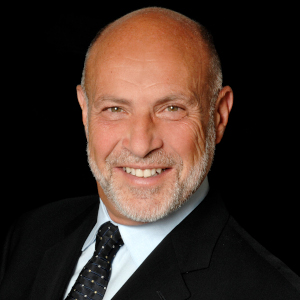
Gerald Pulvermacher & Associates (GPA) is a North American consultancy focused on guiding families in transitioning their business to the next generation, whether family, non-family or both. Founder Dr. Gerald Pulvermacher, Ph.D., C.Psych., began his career as a clinical psychologist in Ottawa. Today, his team consists of highly credentialed and experienced practitioners, many of whom have led businesses and thereby understand first-hand business, organization, and psychological challenges associated with transition. GPA clients come from a myriad of industries, with many to be found in real estate development, construction, automobile dealerships, financial services such as banking, insurance, and wealth management, home care, fashion, professional services, biotechnology and high tech. The origin of GPA can be traced back to the early 1970s with clients served throughout North America. Pulvermacher can be reached via gerald@gpulvermacherassociates.com. The firm’s website is www.gpulvermacherassociates.com.
The Canadian Family Offices newsletter comes out on Sundays and Wednesdays. If you are interested in stories about Canadian enterprising families, family offices and the professionals who work with them, sign up for our free newsletter here.
Please visit here to see information about our standards of journalistic excellence.