


Data centres have become popular investments for family office investors, with the artificial intelligence (AI) revolution bringing exponential demand for digital and physical infrastructure.
But while the global demand for data centres soars, with so-called hyperscalers increasingly dominating the sector by tapping into debt markets, concerns have risen about the potential for overbuilding, amid rising costs. While analysts and family office experts are keeping a watchful eye on the Middle East conflict and other developments, they don’t expect the data centre momentum to slow.
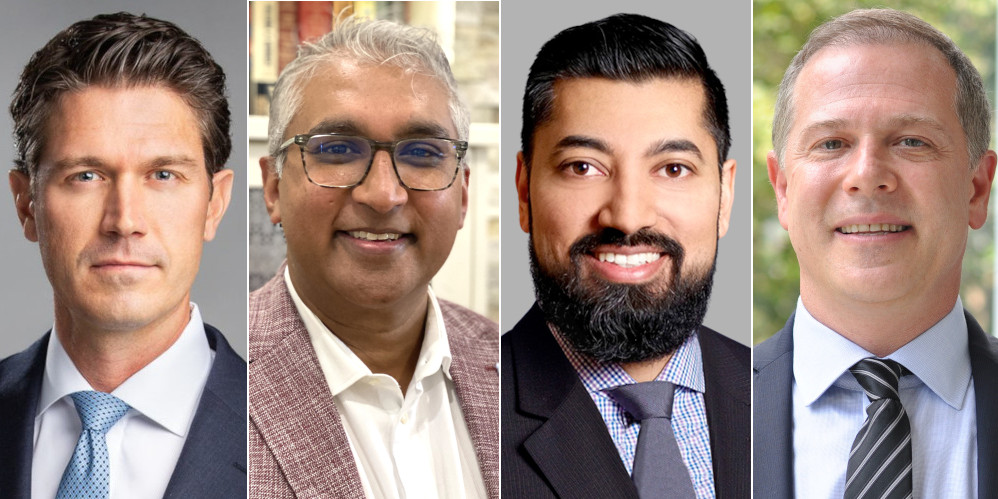
“The locomotive has left the station with regard to the AI spend—the debt issuance and the hyperscalers building, whether it be the data centres, the chips that they need and the power needed to satiate them,” says Robert Janson, co-CEO and chief investment officer of Westcourt Capital, a multi-family office in Toronto. “This is as big as any major project that the world has ever undertaken on a dollar basis.”
He notes that a report from Jones Lang LaSalle, the 2026 Global Data Centre Outlook, indicates that data centre occupancy around the world was 97 per cent at the end of 2025, while 77 per cent of all capacity under construction is already committed to tenants. “These metrics are hardly a sign of froth or overbuilding,” it concludes, noting that power constraints and long project lead-times will help keep the sector in balance.
Data-centre investment is going to be a persistent need for the near to mid-term.
Sanjay Pathak, KPMG Canada
“That’s a tight market, not a bubble,” says Janson, noting that up to $3 trillion will be required to support 100 gigawatts of new supply coming online between 2026 and 2030, according to the report. “It’s a massive number, equivalent to the GDP of France or Japan.”
He says that by 2030, AI is expected to represent half of all data-centre workloads, with rising AI inference demand—where large language models (LLMs) are used—driving geographical distribution and regional deployments.
‘A persistent need for the near to mid-term’
Meanwhile, reports from OpenAI and Google on the rapid scale of adoption and frequent use of AI is proof that AI usage is becoming mainstream, Janson says, noting that even family offices themselves are quickly adopting AI and realizing its benefits. “AI is becoming ingrained into daily routine and will quickly become the default.”
Sanjay Pathak, partner and national leader for technology strategy and digital transformation services at KPMG Canada in Toronto, says data centres will become more and more ubiquitous. He doesn’t see demand in the sector dropping anytime soon, although the way data centres operate may evolve—for example, with new architectures increasing the throughput each can handle.
“The trajectory of the architecture that underpins AI may shift, and it may create new needs and may eliminate old needs, but data-centre investment is going to be a persistent need for the near to mid-term,” Pathak says.
These metrics are hardly a sign of froth or overbuilding.
2026 Global Data Centre Outlook, Jones Lang LaSalle
The “circular” ecosystem, where money flows from tech giants to AI firms and then back when they lease space in data centres, “represents the co-dependent nature of where the technology is headed,” he says. As AI evolves, “you’ll need more data-centre capacity; it’s sort of like a futures lock-in, if you will.” The size and binding nature of the circular investments, however, give Pathak pause. “Those arrangements are a little bit tricky.”
Pathak also points out that in addition to the big tech firms continuing to build out infrastructure, there could be a model where third parties are building it, especially given geopolitical and data-sovereignty influences as well as national interest forces. This could bring a more decentralized construction of facilities that are “purposely disconnected from large tech infrastructure”—the so-called sovereign cloud, where countries like Canada “can play to their strengths while supporting sovereign interests,” bringing opportunities for investors here.
The federal government is expected to release its AI strategy soon, he notes, which could include elements related to innovation, privacy, sovereignty, skills development, regulation and public safety.
Data sovereignty plays a role
Chris Gandhu, partner and KPMG’s family office leader for the Prairies, based in Calgary, says data sovereignty is becoming a meaningful driver of investment decisions in the build-out of data centres and AI infrastructure more broadly.
He notes that countries are pushing for more autonomy over their data, much as they are realizing the need for energy sovereignty in the current oil crisis in the Middle East.
“It makes the investment case stronger,” he says. “There is an increasing focus on avoiding scenarios where events in one part of the world can directly disrupt critical domestic infrastructure or supply chains.”
Places such as Alberta especially make sense for the building of data-centre infrastructure, he says, given its lower cooling costs, political and regulatory stability and an AI data-centre construction strategy. “The province is aligning the policy environment to encourage this type of development.”
The locomotive has left the station with regard to the AI spend.
Robert Janson, Westcourt Capital
Meanwhile, long-duration assets such as data centres continue to be “well suited to a family office that thinks more like an institution and has capital that can be locked up for a bunch of years or even a bunch of decades,” Gandhu says. “This is generational capital. The focus is not on near-term liquidity, but on preserving and compounding value over decades.”
Joseph Abramson, the Montreal-based co-chief investment officer at Northland Wealth Management, a multi-family office in Oakville, Ont., feels it’s important to “pick your spots” when it comes to investing in data-centre opportunities.
“We’re now at the stage where you have to be more selective,” he says. For example, leading private application software companies that are part of the outfitting of the centres are “starting to create a lot of value,” he adds, and should have strength over a three-to-five-year time horizon.
“It’s AI-enabling software at the application layer,” he explains, noting that in a couple of years there will be a shift to opportunities involving actual users of AI capacity, where he expects different companies to dominate various verticals.
Suppliers down the chain
Meanwhile, Abramson says that data-centre infrastructure over the next two years or so will continue to bring value. But rather than deals with circular financing between “several well-known players that everybody knows,” these will be opportunities involving suppliers and sub-suppliers. “You can do very solid deals that have a lot of collateral behind them. The demand is still massive to get financing.”
Janson notes that large hyperscalers are under intense scrutiny, so any stumble quickly brings a swift reaction from investors. “It’s not going to be a linear walk in the public markets, yet even in taking their punches, these are massive, trillion-dollar companies,” he says, calling the firms “quasi-government risk.”
He says that to capitalize on the data-centre boom, family offices should be investing in renewable and traditional power sources as well as data centre construction, which Janson likens to “furnishing the picks and shovels during the Gold Rush.” If there is no long-term resolution to the crisis in the Strait of Hormuz, it could lead to inflation and even stagflation, he allows, but “I’m still a glass-half-full guy right now.” He says that in the arc of the AI spend, “we’re probably only in the fourth or fifth inning—we are not near the end.”


Among the risks to the data-centre build-out, he notes, are a saturation of the debt markets, because hyperscalers compete for dollars with sovereign debt issuance and other investment-grade issuers. Spreads could widen, making the cost of debt for issuers more expensive, and there could also be a “return mismatch,” where the expected future revenue of hyperscalers doesn’t keep up with the present-day costs of the build.
“The cost of debt has to remain reasonable, the revenues and the expectations of the business models have to remain, and the global economy has to stay relatively healthy,” Janson says.
“You can have ebbs and flows to it, but we have to avoid any major crisis,” he adds. “And with that—and that’s a pretty wide berth—we will continue to build this out.”
Mary Gooderham is a writer, editor and communication advisor based in Ottawa. She leads Cohen Gooderham Communications and has worked as a journalist for more than 40 years at The Globe and Mail, as a recording officer at the International Monetary Fund and as a custom content creator for online and print media. She’s been a contributing writer at Canadian Family Offices for four years, focusing on investment strategy, trusts, philanthropy, women in finance and estate planning.
The Canadian Family Offices newsletter comes out on Sundays and Wednesdays. If you are interested in stories about Canadian enterprising families, family offices and the professionals who work with them, you can sign up for our free newsletter here.
Please visit here to see information about our standards of journalistic excellence.