


This article is part of our special report on venture capital and family offices.
Interesting things are happening at the spot where venture capital and philanthropy intersect. Philanthropic venture capital—or venture philanthropy—is opening up new avenues for investors. Whether it leans more toward profit or pure philanthropy, it’s proving to be an effective investment strategy that can also do great good.
The medical sphere is a prime example. Investors are matched with new technologies and treatments that might not otherwise be brought to market. Once commercialized, these regimens may save lives; they may also generate financial returns for the investors and the sponsoring charity.
Numerous models are used for these deals. Here are a few examples from across the country:
- In Toronto, the commercialization venture firm FACIT works with the Ontario Institute for Cancer Research to identify and support technologies that could address unmet oncology needs. Also in Toronto, the LEAP | Pecaut Centre for Social Impact addresses social issues by supporting the development of its chosen non-profits and social ventures with funding, strategic partners and capacity building.
- Montreal’s McGill University Health Centre Foundation funds research in exchange for royalties or control of intellectual property. Also in Montreal, the McConnell Foundation focuses on communities, reconciliation and climate through impact investing with a goal of generating measurable, intentional positive impact.
- At the University of Calgary, the investment fund UCeed invests capital from donors into early-stage technology startups, with all returns recycled back into the fund to support future ventures. Its funding areas include health, engineering, science and energy.
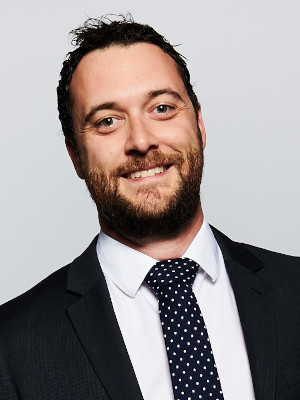
“Venture philanthropy is applying a venture-capital mindset to philanthropy outcomes,” says Colin Hennigar, who is the chief development officer for both Toronto’s SickKids Foundation and Upside Foundation of Canada. It’s also a means of attracting “a new group of donors who would not normally donate to SickKids.”
The SickKids Breakthrough Fund pools money from donors to advance research that has the potential to be commercialized, bridging the so-called “valley of death,” a term for the risk and under-capitalization that often prevent promising research from advancing.
The fund has raised more than $1.4 million over five years to support 12 projects across the hospital, funding proof of principle to attract larger grants. Revenue from successfully commercialized projects will return to the fund.
“One of them is very close,” Hennigar says: a brain-tumour liquid biopsy that could provide an alternative to more unpleasant procedures for young children.
SickKids’ Upside Foundation is a DAF (donor-advised fund) that allows founders to pledge 1 per cent of their equity in a high-growth startup, which is disbursed upon their exit to their chosen charity.
One investor was able to advance two “amazing algorithms that are changing lives,” he says: One speeds up triage in emergency reception, and the other can predict a cardiac event in a young patient before it happens. Returns from funded projects go back to the donor’s foundation or DAF.
“This is an incredible and exciting way for families to support communities across Canada,” Hennigar says. “For those who like to take that risk and see a return—financial or otherwise—venture philanthropy is the way to go.”
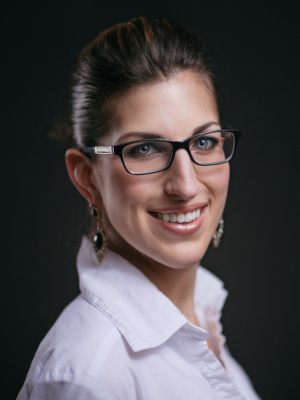
Bri Trypuc is the principal and founder of Trypuc Philanthropic Office in Toronto and executive director of the Robert Kerr Foundation.
“Within our grant portfolio we have an open call for proposals,” she says. This helps the foundation identify service gaps they might otherwise miss. One example (“now a multi-million-dollar charity”) grew from the recognition of a support drop-off after foster care, which ends at age 18.
Trypuc was personally involved in an initiative to provide palliative and medical care to people who are homeless, resulting in “the first recuperative health space in Toronto, for about 200 individuals. It’s never been done before,” she says.
In these cases, the “venture” aspect relates to building needed initiatives that have no other supports, with the goal of creating a self-sustaining entity to fulfill a social good rather than to generate return for investors.
“It could fail, but we’re all willing to try because the concept is grounded in the context of the problem,” she says. “We understand the evidence behind the solution, and we understand that there’s a gap.”
‘Mission-driven investing’
At Lumira Ventures in Toronto, “we don’t call it venture philanthropy, because we have a real return objective. We have a commitment to pair our expertise with that capital to grow that entity,” says Peter van der Velden, managing general partner. Lumira’s chosen term is “mission-driven investing.”
“The Cystic Fibrosis Foundation started investing some of their capital into what they thought of as best-in-class companies developing treatments for cystic fibrosis, and now they have $3 billion in capital and don’t have to fundraise anymore,” he says.



In 2025, Lumira partnered with the Terry Fox Foundation to inaugurate the Cancer Breakthrough Fund, which matches the foundation’s research network with Lumira’s investors and company-building expertise to support the development of new cancer therapies. “We’ve donated 25 per cent of our fees and our carry-back to the foundations that are investors in the funds,” says van der Velden.
“Over the last decade and a half, our companies have brought more than 40 FDA-approved products to the market, and many of those are truly transformative treatments and cures for big unmet needs,” he says.

“If you’re a family office and you want to make a difference in an area like healthcare, you can make a donation, but there will be no continuity,” van der Velden says.
Even so, he says, venture philanthropy can be a vehicle to “do something absolutely transformative, and it will give a return.”
“It’s an elegant way to let one generation do their thing, let the next generation do another, and keep all the capital in the family.”
Sarah B. Hood is a Toronto-based writer and book author. She has served as editor of three national magazines and written weekly columns for the National Post. She also serves on the editorial board of Spacing magazine. She writes frequently on business, urban affairs and culture. As a food writer, her work has been translated into Japanese and Arabic. She has taught writing at George Brown College for more than 20 years.
The Canadian Family Offices newsletter comes out on Sundays and Wednesdays. If you are interested in stories about Canadian enterprising families, family offices and the professionals who work with them, you can sign up for our free newsletter here.
Please visit here to see information about our standards of journalistic excellence.