

A recent report from JP Morgan Private Bank notes that family offices are hardly immune from market enthusiasm about artificial intelligence—at least as far as intentions go. According to JP Morgan’s 2026 Global Family Office Report, released this week, nearly two-thirds of family offices are focused on investment opportunities in AI.

But there’s a wrinkle: more than half have no exposure to venture or growth markets, where most of those opportunities are expected to arise over the long term, and nearly four in five have no allocations to infrastructure—the “physical backbone of AI,” the report notes.
That disconnect might have something to do with concerns over valuations and volatility. Yet for Canadian family offices looking at investing in artificial intelligence but worrying about market swings, the real estate that’s needed to make this technology actually work might merit a closer look—data centres.
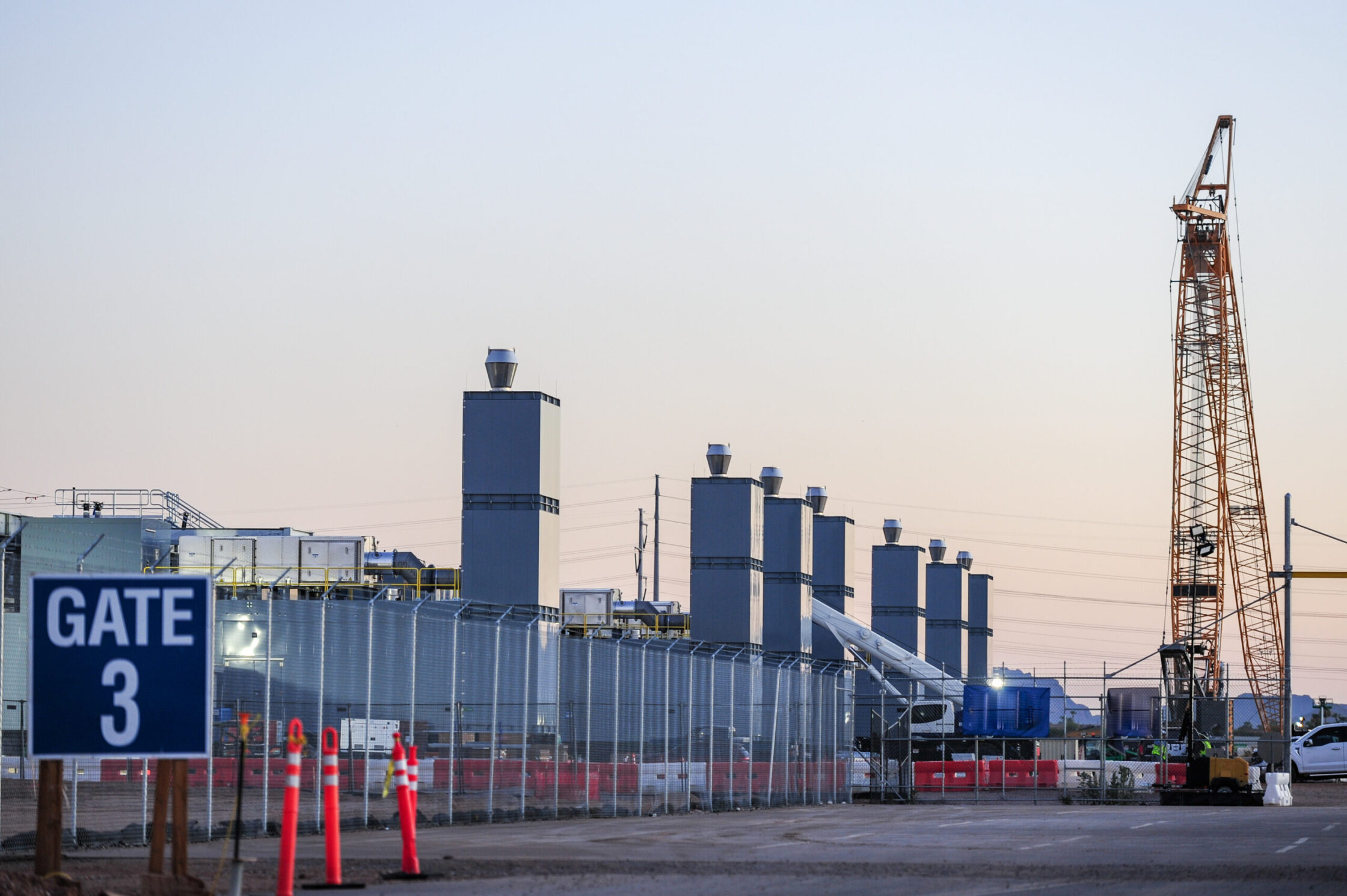
Data centres are the specialized properties that house what we think of as the cloud. They shelter the huge servers that AI needs to store all the information, machine-learning capabilities and the ability to answer the zillions of random questions we ask on our phones, tablets and laptops. Rather than own the server hardware directly, data centres usually operate as “colocation markets”—commercial properties that rent space, power, cooling and security to businesses that need to house their own servers and networking hardware.
While the shares of companies that make AI chips or buy up artificial intelligence developers have been bouncing up and down at a dizzying pace, demand for data centres keeps growing steadily. According to recent market research, Canada’s data centre colocation market is projected to reach US$2.11 billion by 2030, with a 7.33 per cent compound annual growth rate since 2024.
“From the perspective of family offices, these are long-duration, infrastructure-like investments,” says Chris Gandhu, partner and KPMG’s family office leader for the Prairies, based in Calgary.
“Similar to large institutional investors, family offices tend to be patient capital providers, often evaluating returns over multi-year horizons where stability, resilience and downside protection matter as much as headline yield,” he adds. “What can also be particularly attractive is the combination of contracted cash flows, inflation linkage and exposure to long-term demand trends.”
A report by CBRE in September 2025 notes that “data centre development land commands a premium over traditional industrial projects.” The cloud needs to be kept cool, so sites that are suitable for data centres need to be able to access lots of electricity, and there’s still a limited number of sites with the requisite access to the grid, the CBRE report says.
Some developers have noticed the demand for data centre sites. In Toronto, Beeches Development Inc. changed its original plan to build a life-sciences lab building in the city’s Leaside area, pivoting to planning for an 87,000-square-foot data centre. CBRE says that in the first half of 2025, Toronto’s total inventory of data centre capability reached 315 megawatts, with an additional 155 megawatts under construction.
Investment in data centres is diversifying, says Sanjay Pathak, partner and national leader, technology strategy and digital transformation services, at KPMG Canada in Toronto.



“Traditionally, most large companies built their own data centres to service their computing infrastructure needs,” he explains. “Then cloud computing provided an opportunity for companies of all sizes to host their infrastructure with hyper-scalers [large-scale cloud providers].”
As cloud computing grew, data centre investment was initially concentrated among a few hyper-scalers, Pathak says. They’re not exactly household names. According to CBRE, the leading companies include Cologix, Compass Datacenters, Digital Realty, eStruxture Data Centers (Fengate Asset Management), Equinix, Telehouse, Urbacon Data Centre Solutions and Vantage Data Centers.
More recently though, investments have been diversifying beyond the hyperscalers. “This has resulted in a resurgence in data centre building,” Pathak says.
There are many reasons driving these significant increases in cloud capacity needs, he explains.
“Current AI technology such as large language models requires dramatically higher data centre needs. This includes land, building infrastructure, computer chips, HVAC and power. This is one reason why many large technology companies are entering into partnerships with companies to fund and build out large-scale utilities.”
He and others also note that sovereignty and domestic control over data are becoming more important issues as traditional trade relations have been ruptured.
“Countries like Canada are recognizing that they want to keep data and compute within their own borders, and in some cases regulation is requiring more focus on maintaining certain types of data within our borders,” Pathak says.
More companies are also seeking colocation in more data centres because they don’t want to be beholden to Big Tech, he adds. “They want to diversify their data centre needs by repatriating some of their applications and data away from the hyper-scalers.”
Toronto and Montreal remain the primary locations in Canada for data centre growth, but the prospects for growth are strong in other areas, such as Alberta. The energy-rich province “is in a unique position to take the lead on developing and hosting the required infrastructure [for data centres],” according to an analysis by lawyers at Stikeman Elliott released in December 2025.
The ingredients are all there in Alberta, agrees KPMG’s Gandhu.
“Data sovereignty considerations, cooler climate and access to relatively stable energy are making certain Canadian regions attractive for long-term data centre investment,” he says. The big constraints are “access to stable energy, grid capacity and long-term operating predictability. These factors are driving interest in jurisdictions with strong energy infrastructure.”
The Canada-Alberta Memorandum of Understanding, signed in late November 2025 between Ottawa and the province, includes provisions intended to reduce regulatory impediments to data centre development. Two recently introduced Alberta bills are also targeted at promoting data centres.
Meanwhile, Ontario is seeking to boost its energy capacity with the development of the G7’s first commercial grid-scale small modular reactors at Darlington Nuclear Generating Station. The province says the project is on track to be operational by 2030.
While AI appears poised to take over the world, investors should still tread carefully even when considering bricks-and-mortar aspects of the sector, says Larry Sarbit, a Winnipeg-based semi-retired investment advisor and podcaster.
“I’m sure AI is going to have the kind of effect on the world that the advent of the automobile had at the beginning of the 20th century, but even in a field such as data centres, there are going to be winners and losers, so you have to look carefully and unemotionally at all the different players,” Sarbit says.
“No matter how fast the world may move, you still should think long-term.”
Please visit here to see information about our standards of journalistic excellence.