

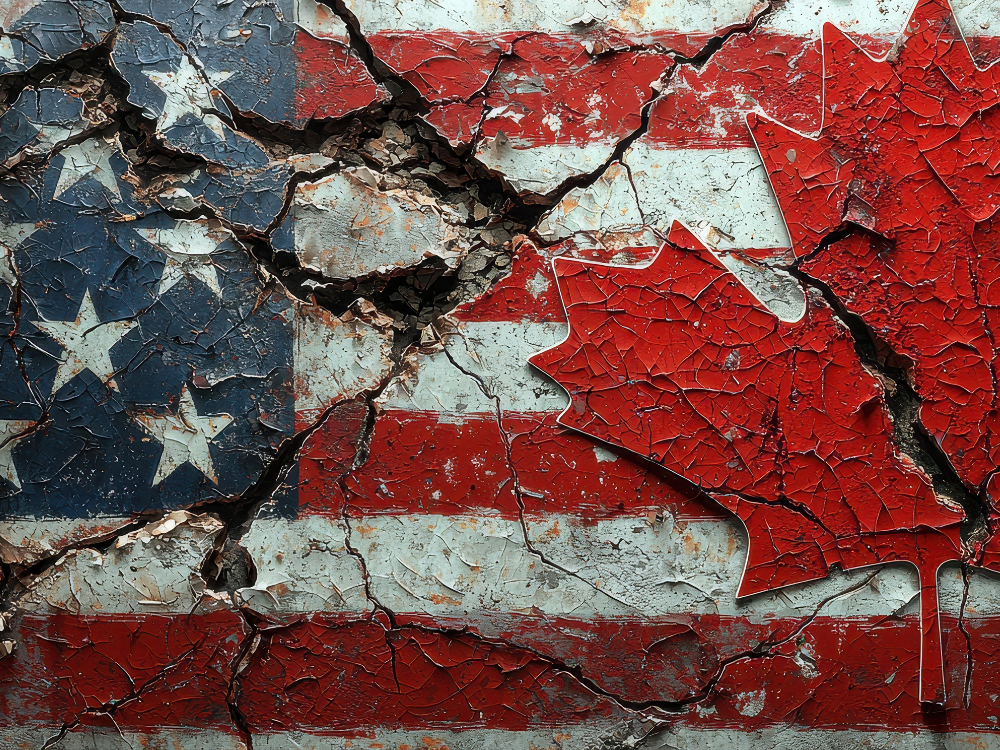
The current predictions by market strategists for 2026 are for 9% equity market returns and nothing spectacular for the bond market. However, as discussed in their latest quarterly Market Observer, the team at Canso Investment Counsel Ltd., a leading Canadian institutional investment management firm, have their worries, as evidence of credit market excess frequently surfaces and the mania in private debt continues. Click here for the full Market Observer.
Canso’s first Market Observer of 2026 begins with a recap of 2025, and despite plenty of unprecedented events, the markets seem to have shrugged and carried on partying. “Seemingly everything that could be traded went up, with even crypto, gold and silver joining the financial market glee,” noted the Market Observer.
The Nasdaq finished the year up 21.1%, the S&P 500 was up 17.9%, and the Dow Jones Industrial Average was up 14.9%. The Toronto Stock Exchange ended up 32.1% on gold, banks and resources, and the MSCI EAFE (Europe, Australasia and the Far East) index up a tad less, at 31.2%. The only thing that didn’t seem to go up was the U.S. dollar, as it was down 9% for 2025 against a basket of major currencies. Cryptocurrency Bitcoin ended down 10.6% for the year; it had rallied early in the year on President Donald Trump’s apparent support but got slammed during the tariff markets and rallied once again before being sold off hard at year end. Meanwhile, gold, that old monetary standby, was up 64.6%.
Trump versus the Federal Reserve
The Canso team noted that the effects of the Trump tariffs were delayed and suspended, so their real impact will take time to discern. However, even though the U.S. Federal Reserve’s eased policy sent U.S short-term yields down, the bond market was not loving Trump’s threats to the independence of the Federal Reserve or his propensity to fund his many promises by borrowing money.
Other developed countries are also running up deficits as healthcare and defence concerns increase spending. For example, following Russia’s invasion of Ukraine, world military expenditure rose by 9.4% in 2024 with all European NATO members increasing their budgets, according to SIPRI (Stockholm International Peace Research Institute). “Canada is at the forefront of increased spending, as the ‘new’ Carney Liberals have blown through the old Trudeau Liberal budget that caused then Finance Minister Freeland to resign,” they noted. “Support to tariffed industries and needed Canadian military spending are worthy causes but it still means spending financed by government bond issuance.”
“Trump’s attacks on Fed Chair Jerome Powell and threats to fire him and Governor Lisa Cook didn’t help. To make things worse, the not so independent Trump Justice Department has just initiated a possibly criminal investigation into the Fed and Powell over purported ‘fraud’ for cost overruns in their recent renovations,” the team wrote. “Clearly, Trump’s priorities for the next Chair of the Fed are not monetary independence but personal loyalty to him and a firm commitment to lower interest rates.” They added that it seems that lower short-term interest rates are on the horizon after a new Fed chair takes over from Jerome Powell when his term ends this May.
It was a very different picture in Canada, with the Bank of Canada, which led the Fed and other central banks on the way down for interest rates, holding its rate at 2.25%. “Where the U.S. bond yields are lower across the term structure, Canadian yields are actually up versus last year from the 5-year to the 30-year Canada bond. That suggests to us that investors are expecting substantial issuance of Federal and Provincial government bonds to subsidize industries affected by the Trump tariffs,” the team noted.
The trade war that wasn’t
The predictions of a trade war and tariff-induced recession haven’t come true, and economists are struggling to understand what happened. The Canso team observedthat economic convention held that tariffs and trade wars were destructive to all countries concerned, creating barriers and lowering international trade. The difference here is that most countries, under demand and threat from President Trump, didn’t respond in kind to the U.S. tariffs, avoiding a dire trade war.
“U.S. inflation did better than expected,” Canso noted. “Companies, anticipating the tariffs, stocked up at the lower prices before the tariffs were implemented, though those are now running out. It also helped that the Trump Administration unilaterally delayed and/or lowered many of his announced high tariffs significantly or entirely, fearing consumer backlash.” The newsletter added that, more recently, the Trump administration delayed duties on 200 imported food items and consumer items. The stated reason was ongoing negotiations with other countries, but the reality was the political pressure on affordability that showed Trump at personal lows in polls, even on the economy that used to be his strength.
Contrary to expectations on the Trump tariffs, the economies in the U.S. and many other countries seem to be doing just fine for now, at least from their reported GDP nominal economic growth.
“In the U.S., the massive investment into AI by the Tech giants has kept things hopping as the demand for data center construction soars. There is much discussion about the ‘K shaped’ economy where the wealthy are getting even wealthier and their share of spending is holding things up. Clearly, if your livelihood comes from the financial markets, your fees and commissions have jumped with the rising markets, but many other people have benefitted from the stock market rally to new highs after the Liberation Day tariff selloff.”
Who gets to enjoy the wealth?
The Canso team wrote that the reason Trump backed off on the worst of his tariffs was the selloff in the stock market, one of his favourite gauges of a strong economy. The President is wealthy, and his businesses also cater to his wealthy peers as clients. He knows from personal experience that people spend a lot more money when their investments are doing well. But the top 10% of Americans by wealth now own 93% of U.S. equities, while the bottom 50% own only 1%.
“That bottom 50% who own 1% of stocks and/or don’t have houses are the downwards leg of the so-called K shaped recovery,” the newsletter noted. “Combining them with the top leg of the K gets us to the overall GDP and income numbers. Polls and surveys show those bottom K voters are not impressed with their share of the spoils at present.”
Meanwhile, in Canada …
The Canso team acknowledged that Canada has so far avoided economic doom as well, with lower average tariffs than other countries due to the significant goods exports covered by the United States-Mexico-Canada Agreement (USMCA) free trade agreement. However, they added, punitive U.S. tariffs on the important steel, aluminium and lumber industries are still in effect.
“The problem for the Carney team, as we see it, is that they think Trump will be drawn rationally into negotiating a ‘Win-Win’ deal. Trump’s recent moves in Venezuela should give Carney and his trade team pause,” the team wrote, adding that Carney should not assume that Trump wants a fair deal or will see the mutual benefits to free trade.
Carney went from ‘Elbows Up’ during the election to dropping all of the Trudeau tariffs that were designed to maximize the hurt to Republican politicians, and he surrendered to Trump on the Digital Sales Tax. “That means that Canada has few tariffs on inbound U.S. goods and that certainly won’t foster a ‘reindustrialization’ of Canada,” the authors noted, adding that Carney set very high expectations of his negotiating skills during his election campaign, so he will be under immense pressure to settle.
Carney tries to shop elsewhere, but the U.S. has the geographic advantage
While waiting for an elusive deal with Trump, the Carney government strategy is to diversify Canada’s trade into other markets and increase trade between the Canadian provinces. But a lot of Canada borders the U.S., as the newsletter pointed out, making it very central logistically to much of the U.S. population and a very attractivelocation for Canadian and foreign businesses to supply that large market.
“Despite the protections of the USMCA, by dropping Trudeau’s tariffs in the hopes of striking a deal, Mr. Carney has accomplished the opposite of the National Policy,” the team wrote. “He’s shielded U.S. manufacturers from Canadian tariffs while having tariffs on the many Canadian manufactured goods that use aluminium and/or steel that attract 50% U.S. tariffs.” The lack of tariffs on U.S. competitors pretty well sounds the death knell for Canadian manufacturers, largely concentrated in Southern Ontario, if this keeps up.
“Perhaps it’s time for a new National Policy if Canada is to remain an independent nation. As Trump says about the U.S., we Canadians have almost everything we need in Canada. Under free trade, we have scaled our successful manufacturing to meet the U.S. market and given up on smaller manufacturers. Studies supporting the benefits of free trade in the 1980s showed a 1-3% increase in GDP. Is that a cost that we Canadians should bear to have an independent Canada?”
What happens next?
The Canso team is worried. They base their outlook on the prospects for risk and return, and valuations are looking stretched to them. “Evidence of credit market excess surfaces frequently and the mania in private debt still worries us,” they warned. “If the credit market implodes, then equities won’t be far behind.”
The outlook? “We think Canada will have a difficult 2026 unless the U.S. Supreme Court rules against Trump’s tariffs and/or a quick trade deal is struck,” the Canso team wrote. “Even then, the steel, aluminium, lumber and auto tariffs are under different legislation and would survive. Given Trump’s penchant for ‘deals’ and rejection of free trade and multilateral organizations, renewal of USMCA is not assured.”
They added that they hope for the best but, professionally, must worry about the worst.
“With markets frothy and Canada under huge strain, it’s best to concentrate on valuations and be paid for the risks we assume.”
Disclaimer: This story was created by Canadian Family Offices’ commercial content division on behalf of Canso Investment Counsel Ltd., which is a member and content provider of this publication