

Over the past 40 years, Prem Watsa and the growth of his company, Fairfax Financial, has become one of Canada’s most remarkable success stories. But it has also been one that has remained incompletely told—until recently. In his book, The Fairfax Way: Inside Prem Watsa’s Secret to Lasting Success, veteran Canadian business journalist David Thomas tells the story of Fairfax with unprecedented detail, perspective and access to its famously media-shy founder.
In this video interview, Canadian Family Offices managing editor Joe Chidley chats with Thomas about Watsa and his impressive journey, from arriving in Canada from India with almost no knowledge of financial markets, to becoming a renowned value investor who has often been dubbed the Canadian Warren Buffett.
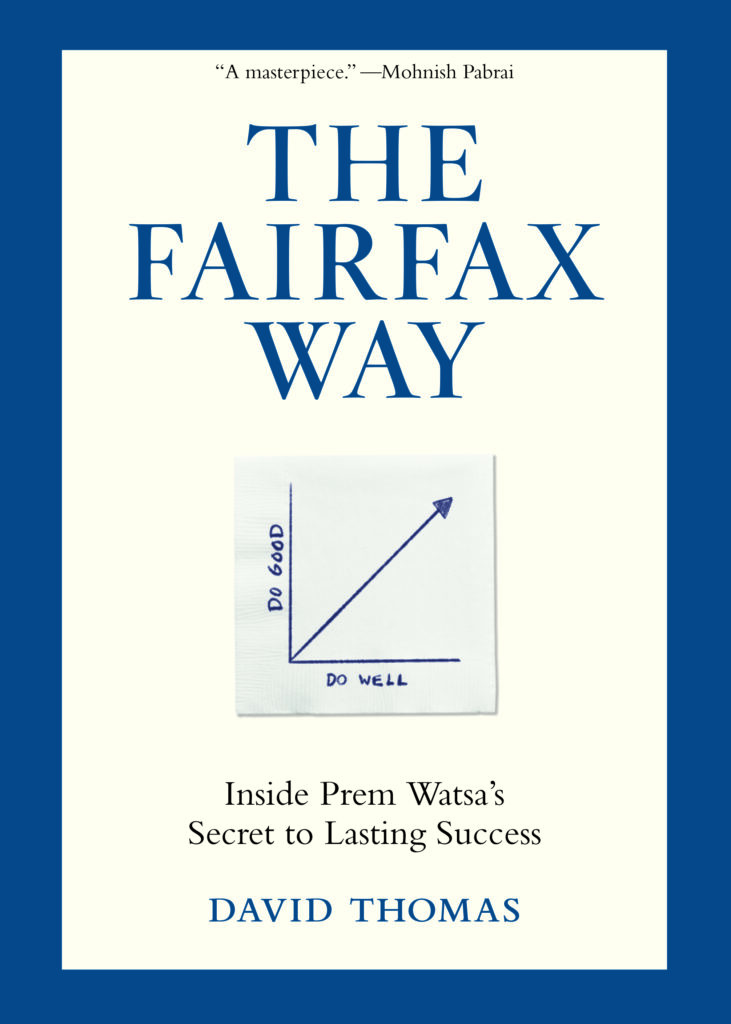
Thomas’s book does more than recount Fairfax’s path to success. It also includes compelling nuggets of wisdom relevant to families of wealth and family offices. For instance, The Fairfax Way lays out Watsa’s vision for capitalism as a force for social good—one that deeply informs his approach to philanthropy—and his ideas about long-term thinking both in investments and in managing a company. And it reveals Watsa’s plan to ensure that Fairfax remains a family business not just across generations, but centuries.
In this conversation, Thomas talks about that and more—including how he convinced Watsa to give him such unprecedented access.
The Fairfax Way: Inside Prem Watsa’s Secret to Lasting Success, is published by Viking, a division of Penguin Random House Canada.
Transcript
This transcript is provided for convenience and is based on the audio recording of the video. While efforts have been made to ensure accuracy, minor errors are possible.
Joe: Hello, everyone, and thank you for joining us today. I’m Joe Chidley, managing editor of Canadian Family Offices, and it’s my pleasure to be talking today with David Thomas. David, beyond other notable achievements, is the author of the recent Amazon bestseller, The Fairfax Way, which is a compelling and in-depth look at one of Canada’s most remarkable corporate and personal success stories in the form of Fairfax Financial and its founder, Prem Watsa.
David has had a front-row seat on the Canadian business world for decades now, and I think we’ve crossed paths many times. You’ve worked in a number of places that I have as well. He served twice as the editor of the Financial Post and has led the reporting team at the Globe and Mail’s Report on Business. He served as editor-in-chief at Money Sense magazine, and Canadian Business magazine, and as the business editor at Maclean’s. Originally from Vancouver, he’s now in London, and he’s joining us from there today to talk about The Fairfax Way and how it came together, and some of the lessons, I think, for family offices, for people who are interested in family offices and interested in what makes success, at least for Prem Watsa, who’s a bit of a well-known character, I suppose, in the Canadian business world, and a bit of an enigmatic one. So, this book really does pull back the curtain on that, and it’s a really compelling read.
So, David, enough from me. Thanks for being here. How are you?
David: Pleasure. Thanks for inviting me.
Joe: Yeah. How are you doing? All right?
David: Great. London’s treating me well. A couple of years over here. I finished the book, and it’s a little hard to do the marketing from London, but I’ve been over for a few events, and nice to connect digitally—
Joe: Yeah.
David: —from Islington with you today.
Joe: Yeah. Good to see you again.
David: Yeah.
Joe: So, let’s start with the book. So, for anyone who’s not familiar with Prem Watsa, quick note, who is he?
David: Well, I think he’s 76 now. I don’t know when his birthday is, but a 76-year-old entrepreneur who came to Canada at the age of 20 and did a business degree. Had no inkling that he was ever going to be interested in stocks. Didn’t really understand the market. Just wanted to get a business degree. In fact, he was going to do a business degree in India, but his dad said, “I want you to go to Canada.” He didn’t like the environment in India. Too much strategic central planning, five-year plans, too much corruption, too much bureaucracy. It wasn’t the dynamo that it is today.
So, he joined his brother in London, Ontario, and went to Ivey. And from there, he could’ve gone a few paths. He got into managing money at Confederation Life, and then was going to open up, in fact, did open up his own shop with a former partner. And he was all set to manage pension money and do those kinds of accounts. And then he knew who Warren Buffett was, but he discovered Warren Buffett’s magic trick of being able to leverage the float that you have as an insurance company.
Money set aside to pay future claims, and if you’re smart about it and don’t spend what you are going to have to pay out, and you invest wisely, it can act, if you’re running a profitable insurance company, as free leverage.
So, that was the lure. That’s why we know him, because he decided that instead of managing money, we’re going to start buying insurance companies. And he started building up a holding company, built up a whole bunch of insurers, and several decades later, he’s sitting on an empire of insurance, a big investment arm, but also a lot of operating companies and well-known Canadian brands, Sleep Country Canada, and half the restaurants you see on the highways, from Montana’s to Kelsey’s and The Keg and Montana’s, all those places. Bauer hockey sticks. There’s Golf Town. A lot of retail, and then investments in resources and things like that.
So, it’s a long-winded story, and it’s not a short answer when you say, “Who is he?” And it’s not a short answer when you try to describe what Fairfax does, because it’s notoriously complex, right?
Joe: So, it’s often said that he’s Canada’s Warren Buffett, which is a kind of shorthand, which is, I guess, useful but not altogether accurate, but we can get into that a little bit later. What’s the number on Fairfax now? How big is Fairfax?
David: Oh, they are… What market cap is Canadian and America? The Canadian market cap is about 52 billion, I think. Yeah.
Joe: Okay. And I want to ask, why’d you decide to write the book?
David: I’ve always been fascinated with him, and you know this guy. Anybody who covered Canadian business, he was always the enigmatic Howard Hughes of business in Canada, in that he didn’t like to talk to media. He wrote an incredible shareholder letter, and still does, where he lays everything out, which is a very Buffett thing to do. I’ll talk to you extensively in my letter, and in return, I ask that you don’t pester me with questions during the year until the annual meeting, right?
So, he communicated a lot, but from the outside it looked like he didn’t want anything to do with anybody. And the more I got to know him, he is really just strongly averse to self-promotion or talking about what the company would do. He’s more, “I’m going to put my head down. Watch what we do, and we’ll tell you about it later.”
Joe: So how did you get him to talk to you? Because I remember in my time as a business journalist and editor that his reclusiveness was legendary. How did you get him to talk to you?
David: It was an interesting series of events. There was a piece that I did with him, and it turned out I was fishing, and I fired off an email to him, and I said, “Hey, would you like to be part of this series where I’m talking to people?”
And I expected a no or just no answer whatsoever. And seven minutes later, ping, “Yeah, I’d love to.” And it was the subject matter that was appealing. So it wasn’t, “Can you tell me about your company and why it’s so great?”
Joe: Yeah.
David: No. He’s going to hang up. Or he’ll be polite, and then he’ll hang up.
Joe: Yeah.
David: But this was about the state of capitalism. This was a series that I did as part of a bigger project at the National Post. And he was really keen to talk about that, and he’s keener generally to talk about things. Maybe it’s a fact of being later in your life and you’re thinking of legacy, not just for your own company, but the world, and hoping. He has concerns about capitalism and the fact that Canada’s not as competitive as it used to be, that he thinks capitalism can be a real force for good, which is an interesting point of view because a lot of people might not agree with that.
But you add compassion to capitalism, and it becomes, to his way of thinking, the most efficient way of creating capital that sustains itself, that creates jobs and drives the economy. So, we had that conversation, and it just didn’t stop. So, I did a big, long interview, and as I say, I think later in his life, he’s already looking at legacy and trying to build things that are going to last, including his own company, and he wants to lend a sense of urgency to the mission for Canada to make sure we get back on a more competitive path. So, there are those things, or it could have just been my charm and that I won him over. But what did happen, maybe that’s fiction, but what did happen is we walked out of there, and he felt like I translated him because it was a random, sprawling conversation going in a lot of directions and sort of edited it down into a really concise thing that I think for the first time probably really explained his thinking to the business community and got some of the ideas that he had in his head out because normally he didn’t think media was going to work for him, so he didn’t pursue it. So, we started talking, and then we tried to figure out. He said, “Maybe we need a book.” They did a really small in-house book on their 25th birthday for the company, but it didn’t get distribution. So I was like, “Well, you’ve got to do a public book. You should be in the annals of history. You’ve got to be in the library. You’ve got to be out there.” And they were not comfortable with it, so it was a dance to get him comfortable with the idea.
I said, “I’ll take a stab at it, and you don’t have to promise. And if we end up having to do something else, we’ll do something else.” But we got there, but it took almost three years.
Joe: Three years of convincing?
David: Yeah, because in just writing it and making sure. He didn’t direct it, but I did show him some early drafts, and I think that won him over eventually. So, it was a funny way. It was frustrating. It was a lot of work and a slow process in a way, a bit of a dance just in gaining that trust. But I think it was worth it. It was special for me because it’s a “get”—
Joe: Yeah. Totally.
David: —for a journalist. So, he doesn’t care about that. That’s me. But I think for him and for me, a public book was the right way to go about it. And so, I was really happy in the end that we could get that. It was a scramble, but it was great.
Joe: Yeah. Well, it’s a great “get” because the legend of his hermit-like existence still persists. So, it’s terrific, and it makes it all the more revealing.
One of the things I like about the book is how you get into right to the start, like when he comes over from India, his background in India, some of the challenges he faced there. I didn’t know he was an engineer. I suppose he never practiced as an engineer. And in some ways, his story is really an immigrant success story, right?
David: Yeah.
Joe: How do you think his experience as an immigrant has helped shape his career path, his success over here?
David: I think he talks about it a lot, actually. And the one thing that he says is his kids were all born here. They’ve got three children grown up, two of them involved… Well, all of them involved with the company in some way. And he said, “You know what? The one thing that they really missed out on was that immigrant experience where you got to work a little harder. You can’t take some things for granted. You got to knock at the door for a while before you get in.”
And so for him, I think sometimes people paint it as a rags to riches kind of story, which he says, “Don’t write that. That’s not true. We had money.” His dad was an educator. He got into the very best schools and amazing schools. And so he was well-educated and taken care of. That said, they weren’t rich, but the Horatio Alger story is, came over on the plane with $8 in his pocket. And it’s true, he was going to stay with his brother. He couldn’t even afford to eat at McDonald’s. I was going to say he could only eat at McDonald’s, that was like a treat. So, they did start with very little here, and that’s a tough story. And didn’t know anything about stocks and everything else going into a business school. I think he was a real fish out of water. But he figured it out quickly.
Joe: Yeah, he gives a lot of credit to his business school experience, right, for kind of honing his ideas and where he wanted to go.
David: Yeah.
Joe: And it was during that time, too, that this notion that capitalism can be a force for societal good really took shape, too, as well, right? Didn’t he read some kind of, it was kind of a Horatio Alger kind of book, right? Didn’t he—
David: Yeah, it was Napoleon Hill.
Joe: There’s a name you don’t hear very often anymore.
David: “Think and Grow Rich.” Yeah. So he’s kind of like the grandfather of self-help kind of stuff. It’s kind of promotional, but it’s kind of like the secret. It’s generate goodwill and good things are going to happen to you. So, I think he was inspired in a way, and I think it really touched his way of thinking, generally, about just his optimistic nature and that things were going to work out if he worked hard. And on the other hand, that’s also where he got those ideas about how capitalism, I think Napoleon Hill sort of wrote it maybe a little rose-tinted glasses, but that it was a natural process that somehow the money was all going to be coming back into the society, and that capitalism wouldn’t create an underclass. It would bring everybody up. So maybe he put a bit of a spin on it, but it sure convinced Prem, who’s, I mean, he grew up in socialist India, and he had more of a socialist kind of mindset before his brain was fully formed. And yeah, reading that book, the little episode in the book where somebody gives it to him on the train and as soon as he got off the station, he bought it. And he cites it all the time.
Joe: So, it may have been rose-coloured glasses in Napoleon Hill’s telling, but Watsa has kind of put it to use, right? In the way he runs Fairfax, but also in his approach to philanthropy. Is that right?
David: Yeah.
Joe: So maybe let’s talk a little bit about that. First about how he runs Fairfax, how he sees it as a force for good.
David: Right. The company—it’s funny because, I mean, you know the story, most people maybe don’t, but the name Fairfax itself comes from fair and friendly. So, the fair is fair and friendly acquisitions, that’s where the “acts” of Fairfax.
And it was an idea, as soon as they were in the position of seeing the company come together, making their first purchases of insurance companies, he sort of thought, “Hey, we need to stand for something. It wasn’t like a burning goal. It wasn’t with him as a child, “One day I’m going to be the fair and friendly company.” But he thought, “Hey, now that I’m doing this, we want to make sure we do treat people right.” So,there’s a really strong Christian impulse in there. So come from India, but with a Christian background. And that we’re going to treat our employees well. We’re going to treat other people like they treat us. That’sgoing to be our calling card so that people on the street know if you’re going to deal with us, we’re not going to change terms at the last minute. We’re not going to back out of an acquisition. We’re not going to try to gouge you. And that became just sort of a defining principle. I think he sort of just thought, “Hey, if I’m going to have a company and I’m going to start bringing in people into my house, which will be the offices, is that we need to have values that are defined.” And they spent a lot of time working on those and defining them. So, I think that’s a big part of it.
Joe: Mm-hmm. And what’s his approach to philanthropy? Like is he …
David: Yeah, philanthropy, they started off, as soon as they had some regular profits, they started setting goals, 1% of net income, and it’s now up over 2%, or about 2% every year. So they create a lot of wealth, and these guys are in over 100 countries worldwide. So again, so when you’re raising money, they want to make sure that it’s spent in the communities that they operate in. So, everything in management operates on a very decentralized level basis, where you leave people alone to run their own companies, and when they want to give back, they give back in their own communities. So it’s …
And he’s been involved in a whole bunch of things. He’s seeded money at Huron University for the Fairfax Free Enterprise Institute, and there’s a lot of instances where he’s given money away outside and maybe privately. I don’t know what the breakdown is of what comes from Fairfax and what comes from him. But they’re very active in giving. The company had been building dialysis facilities in Indian hospitals for a couple of decades, I think. And they’re involved in a lot of ventures, so yeah.
Joe: Okay, great. The other really neat part of your book that I like is when you talk about his time at Confederation Life and all the people he met there and how they helped shape his approach to … Well, he’s known as one of the greatest value investors of all time. Tell me a little bit about his approach to value and how he talks about that.
David: Yeah. The funny thing is he went through this MBA program, first of all, not knowing anything about stocks, as I mentioned, but he had one professor who was the dean at the time. And he taught him about investing, and that’s where he caught the bug. So that was where it started, and the guy handed out an Alcan research report. I don’t know which house did it. And just light bulb went on. I want to do that. And modeling, using my brain, looking at ratios and valuations and it wasn’t till later though, here he was in school, and Warren Buffett’s talked about this too, is that they don’t really teach value investing. People learn about Ben Graham later.
Joe: Mm.
David: And so here he was when he got his first job at Confederation Life, and it was John Watson who was his boss, who the first thing he did is he walked over and dropped the… What’s the name of the book?… Value. The Bible of value. There’s two of them. I’m spacing out right now. We’ll get that later for your attendees, though.
Security Analysis was the main one.
Joe: Yeah. That’s the one I have. Yeah.
David: And then there’s The Intelligent… Sorry for my little space out. The Intelligent Investor was the second book, which is easier to read for the average investor. The first one’s quite technical. Anyway, he dropped it on him and Prem talked about that as the light bulb went on.
He defines it, “This became our religion. This was my road to Damascus.” And he’s a very passionate guy and really, he became a bit of a proselytizer to the point where people would tell him, “Just keep it down, Prem.” Because he would try to convince everybody that this was the way. And I don’t think he ever let go of it.
Joe: Yeah. So, you talk about… Obviously, the book traces from there to starting up Fairfax and its history, and you characterize Fairfax as a, what do you say? It’s a rise… Sorry, got a noisy thing going by me… A rise and stall and rise again kind of story. Now, I know it’s like 40 years, but what’s the story arc there?
David: Yeah, I took a long time to try to figure it out and segment it. I was reading through 40 years of letters and annual reports and go, “I can’t figure out where the thread is going to go.” All these things that sound like they’re going to go to the moon and they collapse and other things come out over here. They had a lot going all the time. But I think that’s the easiest way to explain it.
If you’re looking at it, especially from an investor standpoint, because this company… So, the rise part is, hey, let’s buy some insurers. And they were an M&A machine. So we’re launching in ’85. They get a couple going into the early ’90s, and then they just start buying bigger and bigger. And through the ’90s, from the beginning to the end, it was just buying a huge acquisition. The next one was twice as big, and the next one… And the market loved it. So, they were an absolute market darling, right? You’re adding revenue, you’re adding book value, you’re adding everything that investors love to see, but it was an M&A driven story, right? So that whole period from ’85 into the late ’90s to 2000 is the rise. And then the next bit was kind of choppy because they made out really well in the tech wreck of 2000. But then they ran into a lot of trouble, especially the last few acquisitions that they were making in the ’90s.
Unfortunately, in retrospect, he says he would probably do it differently if he were doing it again but took a value approach to buying insurers. So, if you’re buying Gillette or CN or whatever, and you can sit around when it’s in a low period and watch it go up, that’s classic investing. That’s a good recipe for stocks. If you’re buying insurance companies, they’re usually available at a cheap price for a good reason, and it’s really, really hard to get under the hood and identify how healthy their book of business is.
And they bought multiple firms that were just a mess. And so, all of their earnings, they’re just basically taking it with a shovel, whatever they earned on the investment side, and throwing it into a big fire burning in the middle of these insurance companies.
So anyway, that period, and this is when the short sellers on Wall Street went after them, and there was some question about whether they’d even take a fall. And the short sellers thought that they could kill Fairfax. But that whole period, that crunch after year 2000 and for the next few years, they were not in great shape, but then they made out like bandits again with the big short.
Joe: Yeah.
David: So, in the period ’06 to ’09, they were making money when it did finally hit, hand over fist. But then the reckoning. So, I guess that decade is just kind of the lead up to the stall.
Joe: Yeah.
David: You hit 2010, and they were really, really concerned about the economy deflation, the aftershocks of the great financial crisis, and they shorted the market. They thought, “Things are going to fall apart.” So,they took their recipe that worked in the past, and they lost over $2 billion between 2010 and 2016 shorting.
Joe: Mm.
David: And so, you had this period, the rise of the M&A, the sort of choppy bit, and then a long stall. And that’s when a lot of investors, all the way up to about 2016, a lot of investors just lost interest and they thought, “He’s lost his hot hand. These guys aren’t making it work anymore. They’re either going to fall apart, or they’re just going to sit there, and the stock’s going to trade sideways forever.”
And then the rise again kind of started in 2017, and it was sort of disguised for a while, and then 2022 came along and since then they’re just going gangbusters. They’re running like a teenager, right?
Joe: Yeah. So, what was the key to that turnaround in 2016, 2017? What changed?
David: One was to stop shorting.
Joe: Yeah.
David: Which, and Prem owns his mistakes. He’s so great in his letter and he just said, “Sorry, this is all my fault and I’m never going to short again.” And there are ways to position yourself to do well or to protect yourself on the downside without going into straight shorts, right? There’s options. There’s all kinds of things. The trouble is when you’re taking a big short position, the losses has no cap on it, right? The upside isn’t that great, and the downside is almost infinite because it can just keep running. So, if you’re really thinking, “I’m going to be right, I’m going to be right,” and you keep hanging on, which is what they did, you’lljust end up with losing a lot of money.
So, there’s a number of things that also happen in that period. That’s Trump coming in. And the way they read it is, this guy’s going to cut corporate taxes, we’re going to get profits running, the stock market’sgoing to run, we’re going to see inflation. A whole bunch of things sort of from a real macro view, zooming out, were changing. And they said, “Well, one, we better get the hell out of short positions, and we can start going long on some other things.” And they positioned themselves in the bond market for… It took a while, but they were ready when finally in 2022, when inflation started going crazy after all the liquidity that went in after COVID.
They had been sitting in the short end. They thought that the long end of seven, 10 year, 30-year bonds was treacherous. So, they just sat in the short end. And again, same investor is going, “Oh, Prem’s lost his mind on short sales. Oh, none of these things are working out for him. And now they don’t even know how to invest in the bond market. They’re in T-bills when they should be…” Well, really, they were avoiding the most dangerous part of the market. And when it turned, globally, insurance companies lost between 10, 20, 30% of their capital in one year. Fairfax went up.
Joe: Yeah.
David: And they immediately took everything from cash and went back into the bond market when it’s up, at 4 and 5% yields on a 10-year bond. And that was genius. Nobody ever wrote the story. I don’t know. Maybe you and I aren’t working those beats anymore, but we would’ve written that story.
Joe: Absolutely would’ve written that story. And like all the other insurers were probably long, right? Long bonds, right? And that’s a brilliant move, and it speaks to his patience and his long timelines and… Which patience is a great thing until you run out of time.
David: I should throw one more thing in there too.
Joe: Yeah.
David: Because we’re talking about things that changed in Trump and getting the economy and stock market going and inflation and all those sorts of macro trends. But the other thing they did is they really took stock of what they had been doing, and they cleaned up some of their investments. And they also turned back to value conviction, and they looked around and said, “What is the absolute smartest thing that we can be doing? And let’s get aggressive with it.”
Joe: Mm.
David: And they decided it was their own stock. And it began this period where they would sell off pieces of their companies to raise cash to do buybacks. They would spend their other available cash on buybacks. Prem himself bought in 2021, $150 million in his own shares. The stock was just doing terribly, and yet they thought everything had been coming together and people will notice. And they did this unusual trade with total return swaps where, because they’d been spending all their money already doing buybacks and they thought, “How do we participate in the upside of our own shares beyond that?” So, they set up this swaps trade where they would gain on any gain in the stock without actually buying the shares. So, it was an interesting kind of trade. They’d done it with other investments, but it’s a weird thing. I’ve never seen that with other companies buying their own shares with swaps. It sounds convoluted and esoteric or whatever.
The thing’s up $3 billion, that trade, since they put it in play, and they’re still in it. They’re still long.
And so, there’s all these things from buybacks and selling off those pieces of companies and whatever, and it’s the smartest thing they’ve ever done.
Joe: Yeah.
David: In the book, I call that the big long. So, they had their big short and the big long is investing in yourself.
Joe: Investing.
David: But the way they did it was really creative.
Joe: Yeah. And I think a lot of companies perhaps participate in share buybacks to keep their shareholders happy. That it wasn’t necessarily Fairfax’s approach there, right? I mean, they …
David: No
Joe: were buying swaps in their own company. So
David: Yeah.
Joe: yeah. And I think… Oh, we have some questions from our audience here. Well, this is kind of related. So Watsa is known as a bear. I don’t think it’s altogether accurate. But the question from the audience is, what does he think about AI? Did he talk about that at all with you?
David: Hmm. In his letter, there’s not a lot of tech talk.
Joe: Yeah.
David: They’ve invested in Micron before. I don’t know if they still have a position in there. They invested in RIM.
Joe: That’s a tech stock.
David: Yeah. So, they do invest in tech, but it’s seen as the same kind of aversion that I think Warren Buffett and Berkshire have had in the past, though of course, they changed their mind with Apple, quite visibly. So, no. Read his letter. He’ll, I’m sure, do some musing on it at some point, but right now it doesn’t seem to be an investment focus.
Joe: Okay. All right. So with his approach to value investing, wealth preservation is a big part of it, long-term thinking. That’s his approach to investing. That’s also kind of his approach to running a company, right? You point out in the book that he’s looking at keeping Fairfax going for generations, right?
David: Mm-hmm.
Joe: He started off, or maybe not started off, but he thinks in decades. How does that affect things like, and this is another question from our audience. Thank you. What’s his succession plan for Fairfax?
David: Right. Yeah. No, I think everything that he does is always tied to long-term thinking.
Joe: Mm.
David: And that’s the idea that you use compounding on your side and not having a fixed plan because you let opportunities come and you just take advantage of them. You don’t necessarily have it all mapped out, but that’s always the goal.
And as far as the family goes, so he’s been talking about that for, I don’t know, a good 10 years and things have been falling into place in the last two years, especially the last year. And this is, and I guess we’ve got more questions in succession and philanthropy and all these things. This is a family business. There are real parallels to the people who are going to be listening to this and involved with family offices. So yeah, they always intended to keep the company around and when I started talking to him, he’d throw, “Yeah. I’m thinking 200 years. I’d like it to be there for 200 years.” Still head officed in Toronto and still controlled by the family.
Joe: Hmm.
David: So, he did a lot of experimentation, trying to figure out from a tax and control and basis what the best route for them would be, because you can set up trusts and then they get liquidated later or whatever. Family control, for whatever reason, seemed to be the best.
Joe: Hmm.
David: So that’s how they’ve got it set up, is that his stake and family would be combined. That he would pass that on and keep the company. I don’t know the total stake is 40… I’ll get it wrong, so don’t take my word on that. But it’s less than 50%.
Joe: Right.
David: But the voting control is there. They had to adjust the formula once going back 2015 because they had issued so many shares that they have a dual class that the A shares no longer had a really strongcontrol. So, they had to adjust that. But in this case, you would keep the structure in place. The family would be involved, non-executive roles, but there’s currently two members of the family on the board. His son, Ben. He’s the designated successor for a chair position, which would be non-executive.
Joe: Right.
David: And he’s recently moved into that position at Fairfax India, which is their major subsidiary.
Joe: Okay. So is India, this is another reader question, or viewer question, sorry. Is India high on their sort of… I know they’re a global company, but is India one of their focuses? Like one of their major focuses now?
David: Yeah. It’s, again, that long-term, you could sort of see him in his letters musing about that India was a great opportunity, and I can’t remember when they bought it, but they bought Thomas Cook Travel, the Indian version, and in their head, that was going to be the vehicle to start investing in India. And times changed a little bit, and they decided once Modi came along, that things were going to accelerate, and they wanted a bigger presence, so they created the subsidiary, Fairfax India Holdings.
And sorry, where were we going with that?
Joe: How important is India in there?
David: Yeah. Oh, just generally how important. Yeah. So, it’s been growing, but it’s kind of been quiet, and I think it’s going to get a lot noisier.
Joe: Mm.
David: So that initial sort of curiosity and how do we do it? We set up this Thomas Cook. No, we’ve got Fairfax India. Well, Fairfax India has been public since, when was that? 2015 or something.
Joe: Mm-hmm.
David: And it’s sitting there quietly and people don’t really understand the assets. They’ve got a lot of industrial and some shipping kind of stuff, heavy industry, but just a hodgepodge of industries. The ones that they’ve been exiting, they’re making 20% ROEs on, very healthy, but a lot of it’s just been holding onto them and waiting. And the thing that everybody’s watching, which I think will start to really draw attention, is Bangalore Airport.
Joe: Yes.
David: So, they have a controlling stake there—almost three-quarters. And the opportunity, it’s already going gangbusters, but there’s all this development around it, and the likelihood is that they could have a very good opportunity to buy additional airport or airports.
It’s been reported as a done deal in the last week, but this is Fairfax, the parent company. So, Fairfax Financial is close to purchasing a bank for… I get the letters mixed up. IDBI. [Wrote it down]. $5.5 and a half billion, roughly, U.S. So that would be the largest purchase ever.
Joe: Understood.
David: Allied World, insurance company, was close to 5 billion. So, you get a bank, you get airport, you might have another airport. You think infrastructure – it’s the whole privatization of assets. They’re patient. They want to play well with the government. They’re not going to go rushing in and it’s not like Adani or some of the very visible, huge infrastructure plays there, but I think there’s a lot that could be coming. And meanwhile, they’ve been doing a lot of smaller ventures as well. They’ve got a digital insurance play in India that’s just been a real unicorn called Digit.
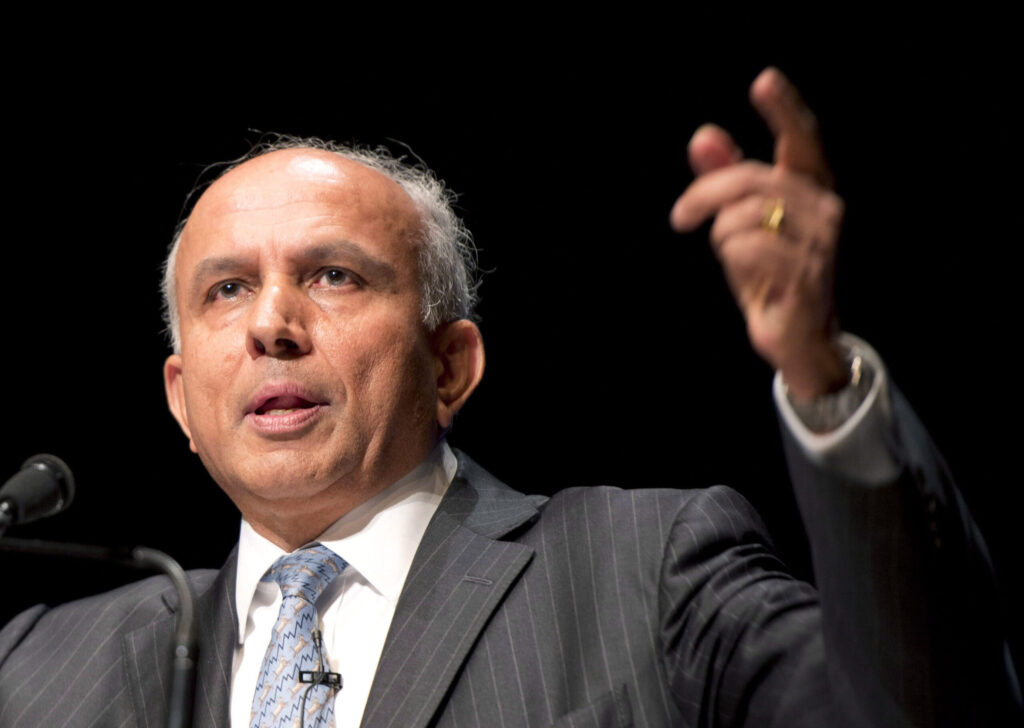
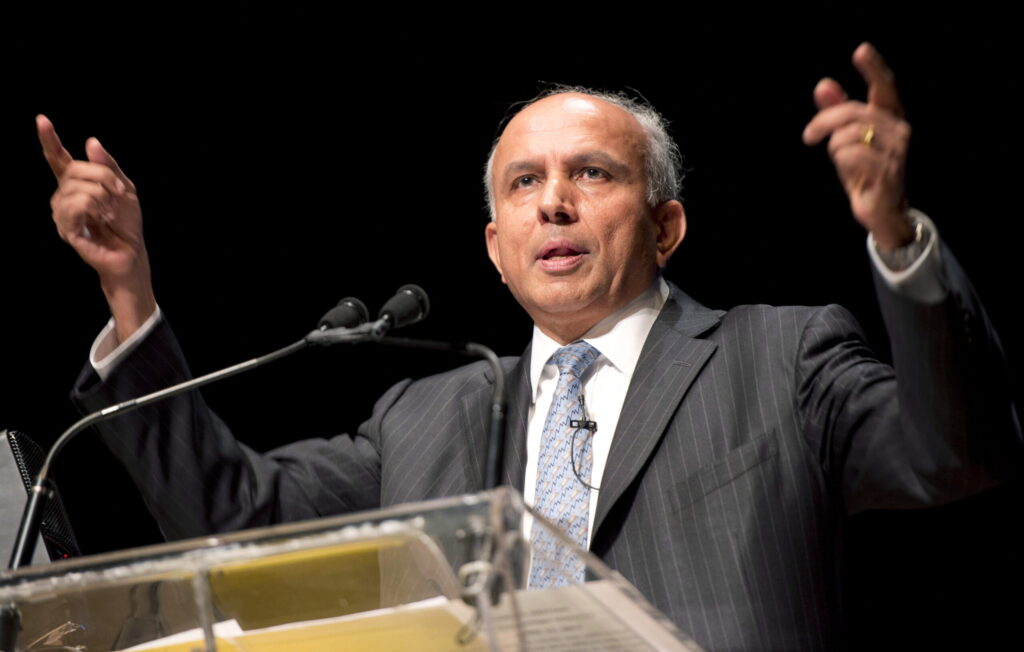

Joe: Yes.
David: So, there’s a lot going on there, and some days it’s a little confusing to look at the assets overlapping because Fairfax Holdings owns Fairfax India, controls it. But they both have Indian assets, so it’s all the India stuff isn’t in Fairfax India. Some of it is the insurance stuff and this bank, if they get it, would probably be held by Fairfax Financial, as far as I can understand.
Joe: Right.
David: Still speculation.
Joe: Yeah.
David: So, yeah.
Joe: Okay. All right, good. So, he’s still obviously heavily committed to his—
David: I think it’s a place to watch. I think there’s going to be a lot of growth there.
Joe: Yeah. Okay, cool. Okay, well, I think we’re almost out of time, so I’m going to ask. So how much time did you spend with Prem, face to face, for this book?
David: Lots.
Joe: Wow.
David: And then we were on the phone every week, it seemed like forever. But we sat down and did a bunch of lengthy interviews initially. But the great thing was, too, just having access to all of them. They’ve got 30 plus operating subsidiary companies, all with really interesting CEOs who all been there forever.
Joe: Yeah.
David: And I was able to talk to all of them, so that was…
Joe: Yeah. So, what’s he like?
David: He’s a really warm, focused, funny, kind guy. Yeah. You have no swearing there, so you have to ..
Joe: You can’t swear if you work there?
David: No. No swearing allowed. Nothing.
Joe: How do they enforce that, David?
David: Anyway, he’s just a really focused, driven guy. He’s up early and working seven days a week, it seems like. So, he’s not slowing down.
Joe: Right. Yeah. Not slowing down.
David: But a real kind, generous guy. Yeah.
Joe: Yeah. It’s interesting reading the book I mentioned this before, too. It’s almost nostalgic. This is a vision of a businessperson that seems rare these days. We hear so much about the tech bros and super billionaires and all this kind of stuff, but he really seems a guy who’s committed to his community, committed to his family, and committed to the business and I don’t know of a better way to put it than an honorable kind of way.
David: Yeah. And this is one of the bigger challenges in the book, actually, was just trying not to come across; I spent a lot of time just recounting all their mistakes. So, I didn’t give them a free ride. But when you come to culture, and culture is just such a big part of it, and it’s so important to him in every meeting and every interaction with people.
Or maybe I’m just too cynical. But I didn’t want to get into that. On the other hand, it’s like the single most important thing that they’ve nurtured and paid attention to. And you see that in the tenure of these people, the retention, and their 10, 20, 30, 40 years with the company. And it seems there’s very few high-profile people who’ve ever left.
Joe: Yeah.
David: Speaks volumes.
Joe: Yeah. And it’s admirable, right? So, as is your book, and it’s quite an achievement. So, congratulations on getting it out there. Congratulations on its success. And to our viewers, I’m pleased to announce that David has generously donated a few copies, and we will be distributing those randomly to a few lucky attendees. But we’re all lucky because we all got to listen to David and find out a little bit more about the book today. So, thank you, sir. We will notify the winners by email.
And it’s been great catching up with you again, David.
David: My pleasure.
Joe: Again, congrats on the book, and thank you for doing this today. It’s been a real pleasure for me, too.
David: You bet. Thanks, Joe.
The Canadian Family Offices newsletter comes out on Sundays and Wednesdays. If you are interested in stories about Canadian enterprising families, family offices and the professionals who work with them, but like your content aggregated, you can sign up for our free newsletter here.
Please visit here to see information about our standards of journalistic excellence.