

After a year of turbulent markets, the disruption of AI, changes to tax policy and increasing cyber threats, Canadian Family Offices decided to poll a few advisors … on what they’re reading this summer.
Our survey revealed a few slightly apocalyptic choices as well as lessons learned from history and more practical options on managing money in these challenging times.
Peak Human, by Johan Norberg
Norberg’s Peak Human focuses on how easily the progress and successes of great societies—so-called golden ages—can be disrupted. He examines ancient Greece, the Roman republic, the Abbasid caliphate of Baghdad, the Song dynasty of China and other eras, drawing lessons about how great cultural, scientific and technological achievements flourished and then disappeared.
Recommended by Colin Deeks, senior wealth consultant, associate investment counsellor, Cidel Asset Management: “I’m a student of history continually trying to find themes that repeat themselves in modern-day life, and this book explores seven ancient civilizations and what made them particularly successful and ultimately led to their demise. It’s written in a way that is engaging and doesn’t put you to sleep.”
The Crisis of Canadian Democracy, by Andrew Coyne
In this book, longtime political journalist Coyne examines Canadian democracy, focusing on election manipulation, a lack of accountability among Canada’s leaders and a parliamentary system that’s under strain.
Recommended by Peter Jessiman, CEO, Jessiman Family Investments Inc.: “I’m looking forward to reading Andrew Coyne’s new book, The Crisis of Canadian Democracy. I recently had the opportunity to hear Andrew discuss this book in person and agreed with many of his points regarding the fractured state of our democracy. Our country is in a precarious position on many fronts, and unity, strength and leadership have never been more important. The release of this book could not have been timed any better.”
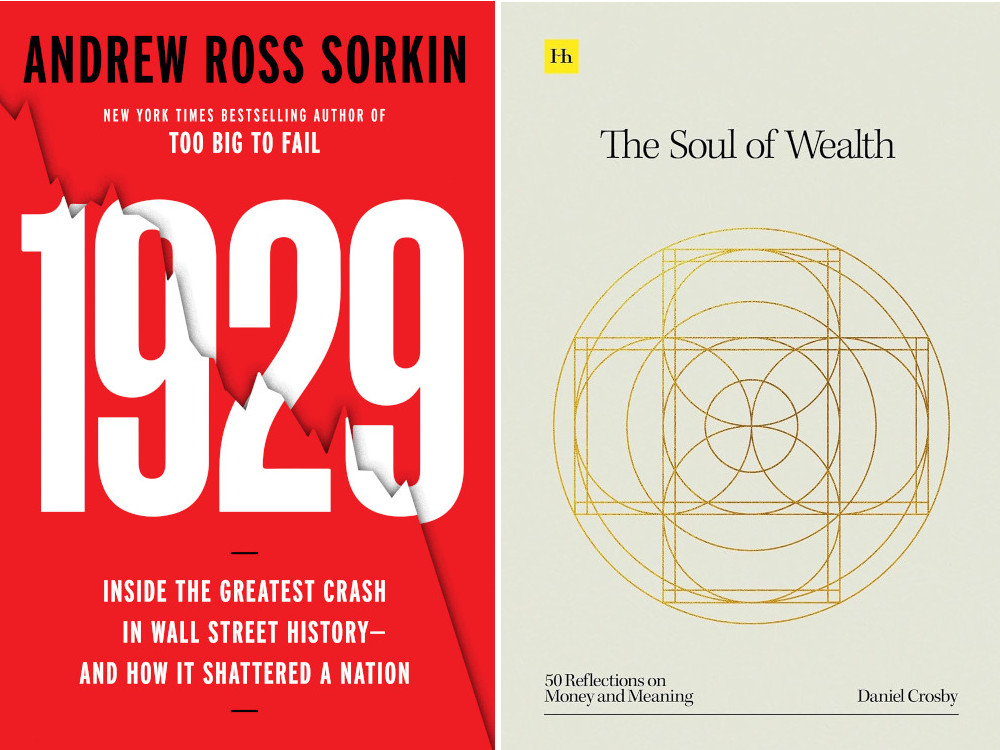
1929: Inside the Greatest Crash in Wall Street History—and How It Shattered a Nation, by Andrew Ross Sorkin
In this New York Times Notable Book of 2025, Sorkin, the author of the bestselling Too Big to Fail, examines the economic crash that precipitated the Great Depression. He explores the battles between Wall Street and Washington, drawing parallels between the highs and lows of that era and our own.
Recommended by Scott Dickenson, partner, Corient: “This book only came out last year, but I was in as soon as I heard the premise. Sorkin is one of the great business journalists of his generation and wrote one of the definitive accounts of the 2008 Financial Crisis: Too Big to Fail. For this book, he goes back in time to present a character-driven narrative history of the 1929 crash that led to the Great Depression. I knew the broad strokes of this story before, but Sorkin does a great job of exploring just how big the boom in the late 1920s was, and just how devastating the crash and the ensuing years ended up being. Lots of lessons that are still applicable today, and the character studies of some of the main players are fascinating.”
The Fairfax Way: Inside Prem Watsa’s Secret to Lasting Success, by David Thomas
Despite the ups and downs in its 39-year history, Fairfax Financial’s annual compound return of 19.2 per cent outperformed the S&P 500’s 11.3 per cent. This book looks at why that happened, detailing how Prem Watsa, its founder, chairman and CEO, built a $45-billion global empire on value investing and insurance assets while maintaining a steadfast commitment to clients.
Recommended by Anik Lanthier, partner, chief investment officer, portfolio manager, Richter: “I just finished The Fairfax Way by David Thomas. It is a very detailed description of the origin story of one of Canada’s most successful entrepreneurs. I really enjoyed it, as there was a lot of transparency and candour about the successes and failures while building a leading company. The book highlights the importance of building a team, being able to delegate, being able to acknowledge your mistakes and having a consistent process and philosophy.”
The Soul of Wealth: 50 Reflections on Money and Meaning, by Daniel Crosby
In this book, Crosby explores the balance between monetary wealth and “soulful” wealth. He presents 50 short essays on what wealth really is, offering readers practical ways to change behaviours to create a wealthier life.
Recommended by Tina Tehranchian, C.M., senior wealth advisor, CI Assante Wealth Management Ltd.: “Daniel Crosby offers a thoughtful exploration of one of life’s most important questions: What is money really for? Through 50 short and engaging reflections, he combines insights from psychology, behavioral finance and everyday life to examine the relationship between wealth, happiness, purpose and fulfillment. Rather than focusing solely on accumulating more, Crosby encourages readers to think about how money can be used to build stronger relationships, support meaningful goals and create a life aligned with their values. The book is insightful, accessible and filled with wisdom that will resonate with anyone who has ever wondered whether financial success alone is enough. While it is a must read for financial advisors, its lessons are equally valuable for anyone seeking a healthier and more meaningful relationship with money.”
The Trauma of Money, by Chantel Chapman
In The Trauma of Money, Chapman, a trauma survivor, unpacks the impact of trauma on financial habits. She provides readers with trauma-focused frameworks and tools to end financial shame, break harmful money habits and increase discernment regarding financial decision-making.


Recommended by James Dunne, founder and family office advisor, Markdale Financial Management: “I’m reading this book because it explores the emotional side of money, including how our personal histories, family systems and lived experiences shape financial decision-making. For family office professionals, I think this is especially relevant because technical advice is only part of our work; helping families navigate the emotions, responsibilities and relationships connected to wealth is often just as important.”
This Is How They Tell Me the World Ends: The Cyber-Weapons Arms Race, by Nicole Perlroth, and Darknet Diaries (podcast)
Written like a spy thriller, This Is How They Tell Me the World Ends examines the cyber weapons market and how the U.S. government hoarded—and then lost control of—software vulnerabilities that allow hackers to break into technological devices.
Darknet Diaries, hosted by Jack Rhysider, explores the darker side of the Internet, delving into hacking, data breaches, cybercrime and digital espionage.
Both are recommended by Alvin Madar, partner, Cybersecurity, Privacy and Financial Crime and National Cybersecurity Leader, PwC Canada: “For summer reading and listening, I would recommend mixing in a few accessible cybersecurity podcasts and books that translate well beyond the industry. Darknet Diaries is a great listen for compelling real-world security stories, and it pairs well with podcasts on AI that explore how emerging technology is reshaping risk, business and society. For books, I’d suggest titles that balance practical insight with big-picture thinking, such as This Is How They Tell Me the World Ends by Nicole Perlroth. Together, they offer a smart, engaging way to stay informed without it feeling like work.”
Anna Sharratt is a business and health reporter and editor with more than 20 years of experience. Based in Toronto, she has written for Canadian Family Offices since 2021. A regular contributor to the Globe and Mail, she has written for Inc.com, Forbes, Business Insider, Canadian Business, MoneySense, the National Post, The Toronto Star and other publications. She is the former managing editor of smallbiz.ca, health editor of Chatelaine and senior health writer for the CBC.
The Canadian Family Offices newsletter comes out on Sundays and Wednesdays. If you are interested in stories about Canadian enterprising families, family offices and the professionals who work with them, sign up for our free newsletter here.
Please visit here to see information about our standards of journalistic excellence.