


When we recently asked family office advisors where they’re finding efficiencies, we were mildly surprised to find how many concur that education and training—for families and advisors alike—are among the most effective ways to do more with less.
So, we decided to dig a little deeper and ask how they are training and educating their staff and executives. Apart from the mandatory upskilling that goes along with maintaining various specialist designations, what topics are they focusing on and how is the training being administered?
With a relative scarcity of academic programs dedicated to the field of family office advising, no two offices are doing it the same way, but all agree that continual learning is a critical component of their strategy for success.
Fuller Landau Family Office (Toronto)
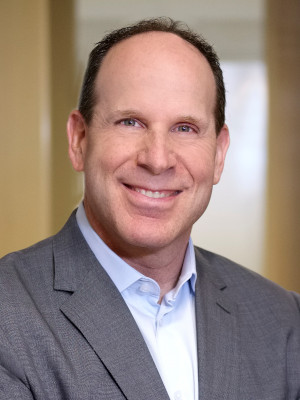
Partner and practice lead Sloan Levett describes his firm’s approach as “multifaceted,” but says it typically starts with the Chartered Professional Accountant (CPA) designation, augmented in no special order by Certified Financial Planner (CFP), Trust and Estate Practitioner (TEP) and Family Enterprise Advisor (FEA).
“A cornerstone is for people to have these four designations, but as our department grows, I won’t require it for everybody, because people’s functions will be more narrow,” Levett says. “With client-facing professionals, we would customize their development uniquely.”
In addition, Fuller Landau has a customized internal training program that exposes advisors to a range of areas, such as investment and tax planning.
“We’ve created online training modules, and we get different people presenting from within our team,” explains Levett. “The first year is the very intensive training; after Year One, it’s more informal.”
Every team member has a mentor, and over the first year, they attend formal monthly meetings that focus on a particular topic area. “It continues after the year either monthly or at minimum quarterly,” he says.
Collaboration between departments naturally generates structured and unstructured development, and advisors regularly participate as learners and leaders in online courses, day courses and conferences.
“I would also say we don’t lose sight of the soft skill development of our people, particularly when they’re client-facing,” Levett says. “How to build and deepen relationships, how to build trust, is equally important as the technical stuff—that’s almost table stakes, the ability to become the trusted advisor to our clients.”
Our Family Office Inc. (Toronto)
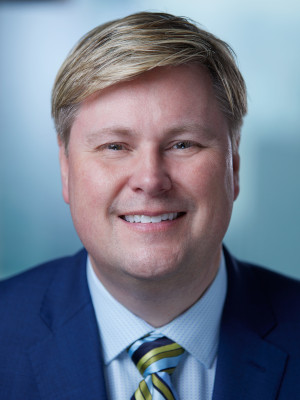
“In a family office practice, you become a generalist more than you ever were,” says co-founder and CEO Tim Cestnick. “So we all have that technical bias, but we don’t just want to go wide; we want to go deep as well.”
New team members are expected to arrive with considerable technical expertise. Onboarding is more about integration into “our philosophy, our approach, our view of wealth,” he says.
“We want them to understand our way of thinking around money, investing, planning and what we do— the secret sauce, what differentiates us from other firms.” Since the firm is expected to expand westward soon, Cestnick adds, “this becomes even more important. You want to offer equivalent services across the country.”
Besides the required knowledge in their own field, team members are expected to be conversant with areas outside their specialty, and the firm arranges in-house training sessions, bringing in outside experts to cover areas like cybersecurity or psychological issues around wealth.
Internal committees on areas like AI or philanthropy educate the rest of the firm about these topics, and team members routinely attend conferences offered by their associations, such as CPA Ontario and STEP Canada.
“We also teach at conferences, and we like that, because we want to position ourselves as thought leaders,” says Cestnick.
Ultimately, “I think it’s critical,” he adds, “that we are educated in the things that, 10 or 20 years from now, families will be asking us for advice on.”
TAAG Family Office (Ottawa)
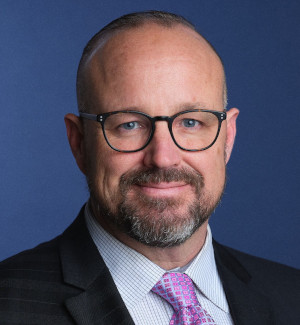
“There is no family office school, but one thing you find as a common denominator in this industry is people who are in a pursuit for excellence,” says Colin Keddy, TAAG’s director of family office.
Maintaining mandatory hours of credit is “non-negotiable,” but the firm also “takes a very structured approach to onboarding and ongoing development,” he says.
“Our team members are encouraged to deepen their expertise within their respective areas, while also sharing that knowledge internally so they can act as subject matter experts for the broader team,” Keddy adds. One of the ways the firm does that is by scheduling a twice-yearly office shutdown that allows team members to explore how to improve service to families, using real client scenarios as case studies, and examining broader industry developments such as implications from the federal budget.
“At a high level, our primary focus this year is around the practical integration of AI. Across the firm, we are actively enrolled in AI-focused courses and are implementing tools in real, day-to-day applications, from notetaking and CRM optimization to client analysis,” says Keddy. Nonetheless, “maintaining human judgment and experience at the centre of client advice is critical to us.”
Ultimately, he says, “our approach to training is grounded in real-world application: continuously learning from the situations we encounter with clients and using those insights to improve how we serve them going forward.”
Richter (Montreal)
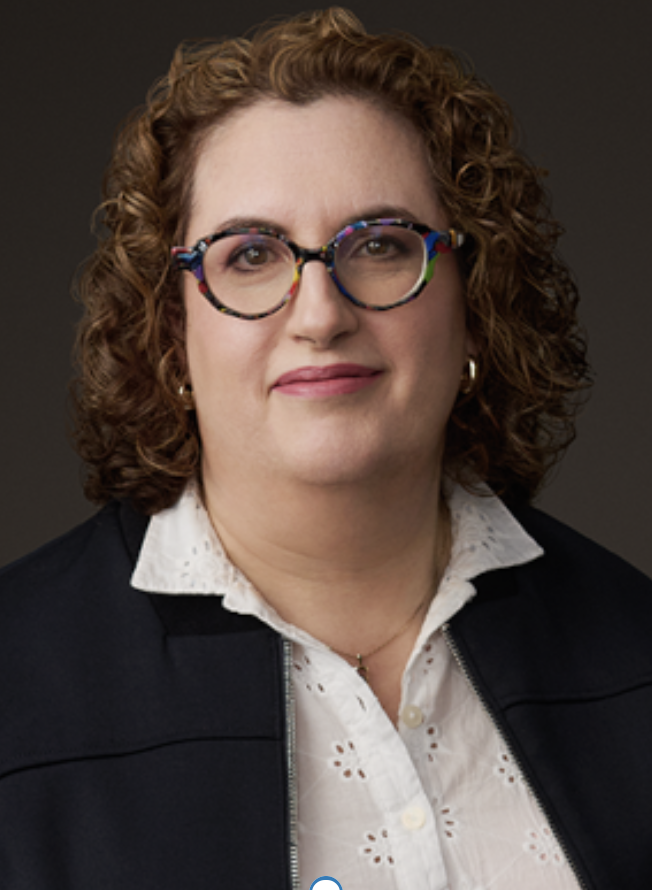
“We follow what we call our team model of learning: each person has an area that they know in depth, and then there are many other areas that we have to know but not in as much depth,” says partner, chief compliance officer and portfolio manager Mindy Mayman, whose firm is celebrating its 100th anniversary in 2026.
In-house training combines formal and informal sessions, including small groups led by “super-users.” The firm has an internal training platform called Richter University and a range of more informal on-the-job training.
“We certainly are thinking of technology at the moment,” Mayman says. However, a variety of technical topics is addressed, “and then we also have training in areas of soft skills—leadership, public speaking. Sometimes those are given in person, sometimes in a video component.”
“We’ve updated our onboarding process,” says COO Marie-Pierre Lépine. “One thing that was very successful for us was connecting people with people outside of their practice group. One of our key differentiators is our ability to work together for our clients.”
The firm is currently paying special attention to leadership development, Lépine says.


“As our people progress, they want to see a career path within the firm. We have in place a mentorship program, and we are working with an outside firm to develop best practices that are aligned with our values and what makes Richter unique. We’ve been very focused on this because we want to see that our people are developing their full potential.”
Sarah B. Hood is a Toronto-based writer and book author. She has served as editor of three national magazines and written weekly columns for the National Post. She also serves on the editorial board of Spacing magazine. She writes frequently on business, urban affairs and culture. As a food writer, her work has been translated into Japanese and Arabic. She has taught writing at George Brown College for more than 20 years.
The Canadian Family Offices newsletter comes out on Sundays and Wednesdays. If you are interested in stories about Canadian enterprising families, family offices and the professionals who work with them, you can sign up for our free newsletter here.
Please visit here to see information about our standards of journalistic excellence.