

This article is part of our Special Report on “Educating the Next Generation of Family Office Leaders.”
There are plenty of professional accreditations within the family-office advisory sphere, from the FEA to more specialized designations like CFA, CFP, TEP, FCSI and MFA-P. Far less common are academic credentials specific to the field.
Cornell University in the U.S. has just added to this rare commodity with its Family Office Advanced Leadership Program, a collaboration with the assurance, tax and consulting services firm RSM. Those who complete the full program receive a certificate from Cornell and CPE/CPD credits with the National Association of State Boards of Accountancy (NASBA).
The genesis of the collaboration started about five years ago, when RSM approached the Smith Family Business Initiative at Cornell to explore the possibility of setting up a program designed to prepare RSM professionals to work in a family-office context.
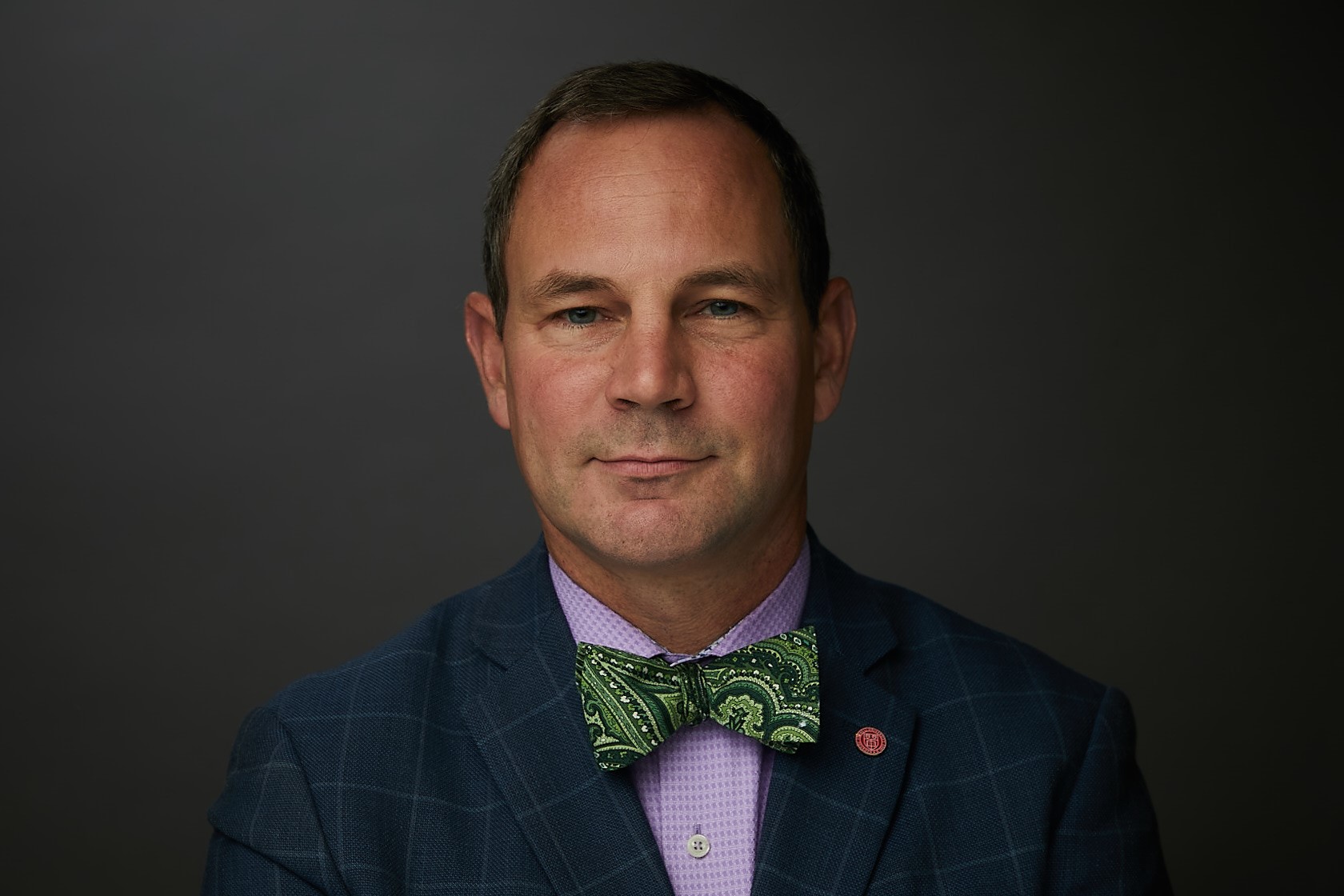
“The intention was to prepare a program that had vigour and depth, that could be like a mini-MBA,” says Daniel Garrett Van Der Vliet, the John and Dyan Smith Executive Director of the Smith Family Business Initiative. Currently based in Ithaca, he previously spent 12 years as director of the Family Business Initiative at the University of Vermont.
In 2022, RSM’s Tony Wood Family Office Institute launched the Family Office Advanced Leadership Program with its first cohort of participants. It continues to run internally, but is now also available to senior executives of embedded and single-family offices who lead multidisciplinary teams serving multigenerational families.
Investing in future family office leaders
The program could also benefit family members. “From the outset, the Tony Wood Family Office Institute envisioned that they could offer this program to the families they do business with,” says Van Der Vliet. “RSM has invested heavily in this for their own future leaders and high performers, but they also see the value in delivering it to the families themselves.”
For both family members and their advisors, “there are limited opportunities for them to come together in a confidential space,” he says. “We saw that in January, when the first group really bonded and came together.”
Spread over 18 months, the program takes the form of four midweek sessions of two-and-a-half days each, carried out in person with cohorts of up to 40 participants at Cornell’s Tech Campus in New York City. The instructors are Cornell faculty members and family-business fellows, with different leaders for each course module.
“The goal is to expose this group to a diverse set of ideas and expertise,” Van Der Vliet says.
“Each session provides a unique blend of Cornell’s academic rigour with RSM’s practitioner experience,” says Libby Hutton, RSM’s Family Office Enterprise Learning Leader, who is based in Minneapolis-Saint Paul.
The first module offered to participants from outside RSM, on the theme of “Advancing Your Role as a Family Office Executive,” took place from Jan. 27 to 29, 2026. “We had 27 people attend the first session, and most have stayed connected with each other,” Hutton says, adding that “participants say they continue to benefit from being part of such a high-calibre group.”
The Tuesday opening session began by exploring the emergence of “Wealth 3.0,” a concept laid out in Jim Grubman’s 2023 book of the same name that charts the evolution of enterprising families and their advisors over the past century. The book posits that wealthy North American families have reached a new threshold of sophistication that requires more comprehensive service offerings from family-office executives than those of the past. (Grubman is one of the module leaders.)
This is an emerging space, and in the context of higher education, family business is still very underserved, and family office even more so.
Daniel Garrett Van Der Vliet
On the Wednesday, participants learned about “Developing High Performing Family Office Executives” and discussed leading trends and potential future needs and challenges related to family complexity, as well as approaches to addressing them. Thursday’s session on “Critical Thinking and Influencing for Impact” covered the fundamental drivers of behaviour and strategies to navigate complex problems through understanding family members’ values, biases and generational context.
The first module will not be offered publicly again until the current session is complete, but new registrants are welcome in the remaining three modules.
Those include “Navigating Family and Complex Ecosystems,” which runs from June 2 to 4, 2026, and covers leadership, family conflict and effective communication when difficult conversations arise.
From Jan. 26 to 28, 2027, “Governance, Agility and the Future Family Office” will discuss implementation and execution of effective governance systems, becoming an agile family-office leader and future-proofing the family office.
The fourth module, “Family, Values and Stewardship”, scheduled for June 8 to 10, 2027, is about facilitating a new generation of wealth and family stewardship, welcoming the rising generation into family wealth and bridging generational gaps.
A small but growing pool of family office education programs
Participants have opportunities to mingle and share meals and conversation. Each module is priced at US$8,000, which includes tuition, program materials and meals. The full program costs US$26,000, not counting travel and lodging.
The Family Office Advanced Leadership Program joins a very short list of educational offerings at institutions of higher learning targeting such a broad range of topics in this field.
“This is an emerging space, and in the context of higher education, family business is still very underserved, and family office even more so,” says Van Der Vliet. “It’s not like entrepreneurship, where almost every business school has a program. Even though there has been growth in family-business organizations, I can probably name fewer than five schools globally that have defined a family-office space or program.”
Among the few institutions addressing similar subject matter are Northwestern Kellogg, formerly known as Northwestern University’s Kellogg School of Management, which is located in Evanston, Ill.; the Wharton School at the University of Pennsylvania in Philadelphia; the IMD Business School in Lausanne, Switzerland, and HEC Paris.


For educational institutions entering this space, “the opportunity is significant,” Van Der Vliet says. The challenge in launching such an offering lies in making connections with families that are “very private, almost to the point of being secretive.” Conversely, he says, family offices and their executives are properly cautious because they need to know “who’s in the room,” since many courses are backed by wealth-management firms or other organizations with something to sell.
“We’ve been very careful about how that is presented to the students and who is in that room. The reason this program has worked is that Cornell leads with faculty expertise,” he says.
“RSM has shown an incredible commitment to this space. Internally, the RSM people who have gone through this have demonstrated a return on investment both in terms of new and existing clients,” Van Der Vliet adds.
“To reach into the family offices themselves is a big step for RSM. For Cornell and specifically the Smith Family Business Initiative, it’s an opportunity to engage this audience and bring the university closer to this population.”
Sarah B. Hood is a Toronto-based writer and book author. She has served as editor of three national magazines and written weekly columns for the National Post. She also serves on the editorial board of Spacing magazine. She writes frequently on business, urban affairs and culture. As a food writer, her work has been translated into Japanese and Arabic. She has taught writing at George Brown College for more than 20 years.
Get our new quarterly newsletter about philanthropy: Canadian Family Offices’ new newsletter brings you key insights, trends and expert perspectives on charitable giving, tailored to Canada’s wealth leaders and giving communities. Click here to subscribe now to stay ahead.
Please visit here to see information about our standards of journalistic excellence.