


This article is part of our Special Report on “Educating the Next Generation of Family Office Leaders.”
Made-in-Canada opportunities for family office and family enterprise education have generally lagged opportunities in the U.S. and Europe. Filling that gap is important, because even the brightest business minds may not be immersed in the fine art of family office dynamics, managing the advisors who manage wealth, and assuring that families are united in purpose and vision in preparation for the next generation.
The good news is that considerable energy is being devoted to overcoming that educational deficit, with fresh offerings and new research aimed at family offices, family enterprises and the professionals who support them.
Education is changing the role of the family office
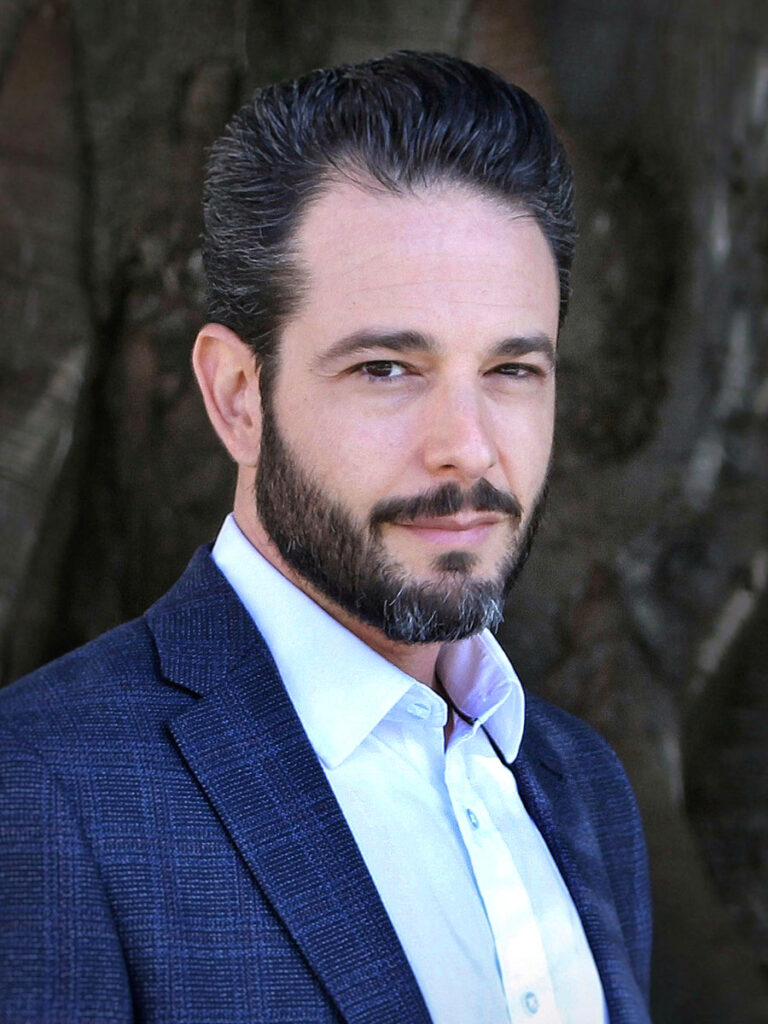
“Canada is experiencing a lot of new wealth, so it’s not surprising that family offices are not as well established in Canada versus Europe,” says Francesco Barbera, founding academic director of the Family Business Institute (FBI) and an associate professor of entrepreneurship and strategy at the Ted Rogers School of Management at Toronto Metropolitan University (TMU). “And the way family offices are being used in places like Europe is also a reflection of whatever education is already happening in that space.”
Emerging family offices in Canada are, not surprisingly, being used primarily as wealth management tools—and less to organize families, establish a purpose for wealth, plan for succession and engage the next generation in being a part of that structure. Elsewhere, education underscores those functions.
“That type of education is not necessarily happening yet in Canada,” Barbera says. “We’re still catching up, in the sense that we don’t have dedicated family office training, and family offices themselves are so new that they’re not necessarily realizing the full potential of what they can do.”
However, he says that expanding offerings in family office fundamentals are currently receiving coverage as a subset of the family business education space. Those nascent programs are percolating up to those likely to benefit from family offices as their wealth expands.
Many newer high-net-worth families may also be struggling with managing a host of advisors, but are not yet aware that a family office or multi-family office is probably the next logical step.
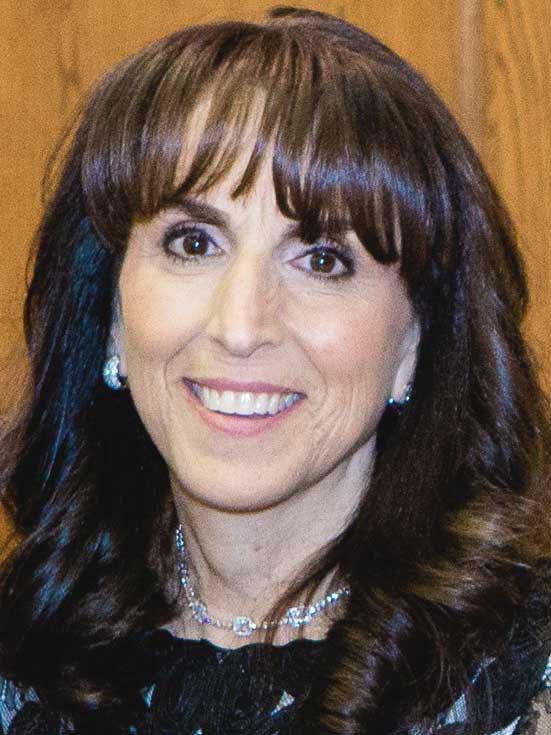
“They have their accountants, their lawyers, their investment professionals, who are all siloed,” says Janie Goldstein, co-launcher of the FBI and a lecturer at the Ted Rogers School of Management. “Greater education drives awareness of the reasons to have a family office that can look after you and provide more of an integrated or holistic view.”
The FBI also conducts research to support family offices and to provide a greater understanding of family dynamics.
Made-in-Canada research is informing actionable insights
That is also an important focus for the Family Enterprise Legacy Institute (FELI) at the University of Ottawa, says Peter Jaskiewicz, the institute’s director.
“Canada is lacking a strong ecosystem and a coordinated strategy to help connect research that produces new best practices, knowledge dissemination to reach the public, and applied education to train family enterprise members and advisors,” notes Jaskiewicz.

Among its efforts, FELI conducts research and translates it into actionable insights, and it offers applied education programs that leverage that research to inform new best practices. The focus of current research includes the development of best practices for preparing the next generation of enterprising families; managing the implications of mental health on the enterprising family and the family enterprise; and establishing effective shareholder agreements in enterprising families.
That research, says Katrina Barclay, executive manager at FELI, doesn’t just affect enterprising families. She notes that family enterprises make up roughly two-thirds of all private sector firms in Canada and contribute about half of Canada’s private sector GDP.
“The strength and continuity of family enterprises and family offices directly affect our communities, our economy and our country,” Barclay says. “In Canada right now, there is limited research and detailed data that give us reliable evidence about enterprising families. There also aren’t enough places for business families, including family offices, to receive relevant training on topics like navigating succession, managing challenging relationship dynamics or building effective governance. FELI is working to help fill that gap.”

Even if the purpose of many family offices is to establish continuity for the next generation, Jaskiewicz notes that studies have shown that more than half of them have no formal plan for passing on wealth across generations through transition or continuity planning. Addressing that gap isn’t simply a matter of acknowledging the problem and attending to it; it involves knowing how to address it.
“This is why one of the core foci of our applied education program at FELI is on preparing and nurturing stewards of wealth and responsible next-generation owners,” Jaskiewicz says.
Defining the family office
While research underpinning educational efforts is critical to the success of family offices, Tom McCullough, founder and chairman of Northwood Family Office, says that the term “family office” continues to be misused and misappropriated, leading to confusion as to what a family office is and does.

“The term ‘family office’ is bastardized in hundreds of ‘family office’ conferences and training offerings, even in the U.S.,” says McCullough. “If you scratch the surface, they’re about hedge funds or private equity, structured finance or some other aspect of investment.”
McCullough has been teaching an MBA course, “The Management of Private Wealth,” at the University of Toronto’s Rotman School of Management for 15 years, and he has written several books on the topic. He’s also one of three experts delivering the “Masterclass on Family Office Designs” program for the Cambridge Institute, to be held from April 13 to 16 in Niagara-on-the-Lake. The masterclass was developed based on input from members of the Canadian family office community and is designed to assist families in gaining clarity on the foundational elements of successful family offices.
“We’ve been doing our bit to broaden the knowledge of families and advisors to families on what a family office is and what families are actually looking for—not what advisors have to sell,” McCullough says. “In part, through education, we believe that the definition of a family office will continue to sharpen.”
In short, a Canadian ecosystem for education and academic research for and about family offices and, to a lesser extent, family enterprise is still evolving. But a growing number of academics and institutions are realizing the demand for shared knowledge and best practices to help families achieve their purpose and inspire the next generation.
Peter Kenter is a Toronto-based writer with a deep and abiding interest in how everything in the world works and how it got that way. He’s written about the economy, investing, financial services, cryptocurrency, pharmaceuticals, mining, energy, cannabis, agriculture, consumer electronics, education, sponsorship marketing, and entertainment. He’s the author of TV North: Everything You Wanted to Know About Canadian Television.
The Canadian Family Offices newsletter comes out on Sundays and Wednesdays. If you are interested in stories about Canadian enterprising families, family offices and the professionals who work with them, but like your content aggregated, you can sign up for our free newsletter here.
Please visit here to see information about our standards of journalistic excellence.