


This is the eighth and final article in our special report Outlook 2026, which puts 2025 in the rear-view mirror and spotlights challenges expected in the year ahead. See the other articles here.
In a world marked by shifting trade relationships and global alliances, as well as overheated equity markets, some Canadian investors are looking to reduce their exposure to U.S. assets. The recently published Canadian Family Offices report, The Multi-Family Office Landscape in Canada 2025, finds that 44 per cent of multi-family offices (MFOs) expect to decrease allocations to U.S. assets over the next 12 months.
Where do they intend to go? Among MFOs, 18 per cent said they intended to increase emerging market (EM) exposures over the next 12 months, while more than 40 per cent said they expect their clients’ exposure to non-U.S. developed markets to increase over the same period.
We quizzed four market experts on possible non-U.S. destinations for investment dollars. They all see bright spots, but they also warn that simply investing in low-cost broad-market funds won’t yield the same results as a deeper dive into what makes the economies of individual nations tick. They cite strong demographics, energy independence, a vigorous industrial base and fiscally prudent governments as specific factors that can elevate economic performance.
Our experts are:
- Paul de Sousa, head of wealth management, sales and development at Sightline Wealth Management, an independent wealth management firm specializing in alternative investment strategies for individuals, families and foundations.
- Michael Zagari, investment advisor and associate portfolio manager at Zagari Wealth Advisory, a Montreal-based firm focused on advanced investment strategies.
- Jerome Li, CFA®, senior portfolio manager and wealth advisor, and Simon Jochlin, portfolio manager and wealth advisor, from the Stenner Wealth Partners team of Canaccord Genuity Group (CG Wealth Management), whose global wealth management business is entrusted with $133.6 billion in client assets. Stenner Wealth Partners deals with families, entrepreneurs and foundations with at least generally $10 million in liquid portfolios or net worths above $25 million.
Europe
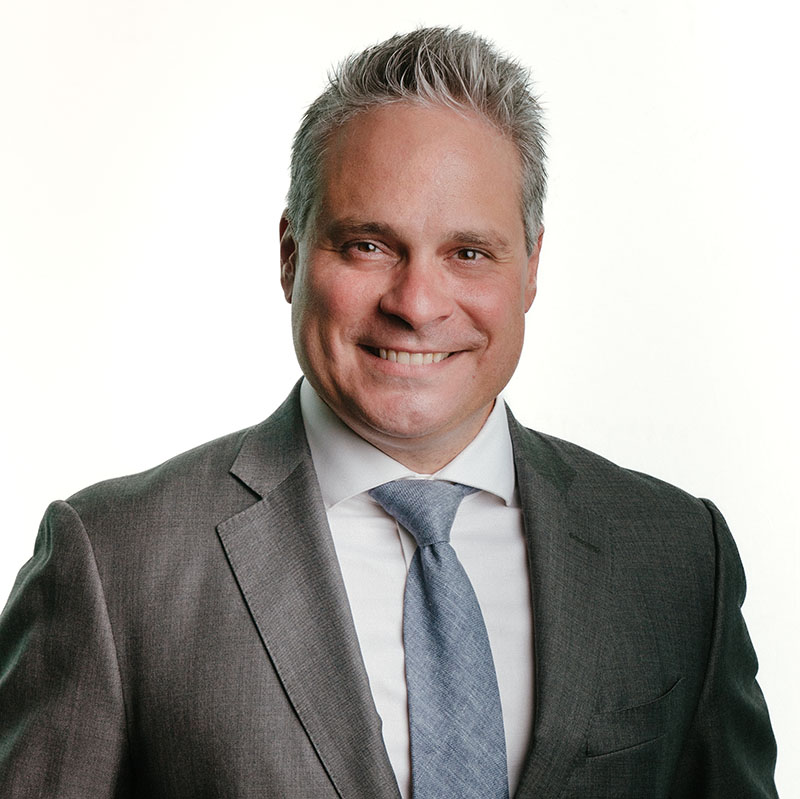
Michael Zagari: Europe remains a compelling equity opportunity for 2026, driven by fiscal expansion, reflation, attractive valuations and expected double-digit earnings growth. A case could be made to allocate 10 to 15 per cent portfolio exposure with an overweight in cyclicals, including banks, defence and infrastructure companies.
Simon Jochlin: I have an issue with saying that Europe’s outperformed the U.S. market this year. Right now, most of [the European indices] are neck-and-neck with the S&P 500. Money will flow to where investors think they’ll be spending or to quantitative-type support, but that’s pretty detached from where economic growth could potentially lie. This surge in European equities has given back all of those gains.
If you had invested in the ETF for Poland, it’s up about 65 per cent on an annual basis. If you had purchased the [S&P EURO 100] XEO basket of European economies, Poland is only a one per cent weight. Poland started the process of westernization 20 years ago. They have a strong population, low debt and are fiscally responsible. They have really strong internal growth and a good industrial base.
The UK, on the other hand, has had rising rates in the face of persistent inflation, high debt and debt service costs. Germany’s been very austere and fiscally responsible for a very long time. But now they’ve backed themselves into a corner, where they’ve broken key relationships on issues like energy.
What the market’s coming to realize is there’s no sustainable plan [in Europe]. They’re applying short-term solutions to long-term problems.
Jerome Li: The first half of this year, there was a lot of outperformance on the European side, but the U.S. has caught up. There are a lot more complications politically on the European side than the U.S. side.
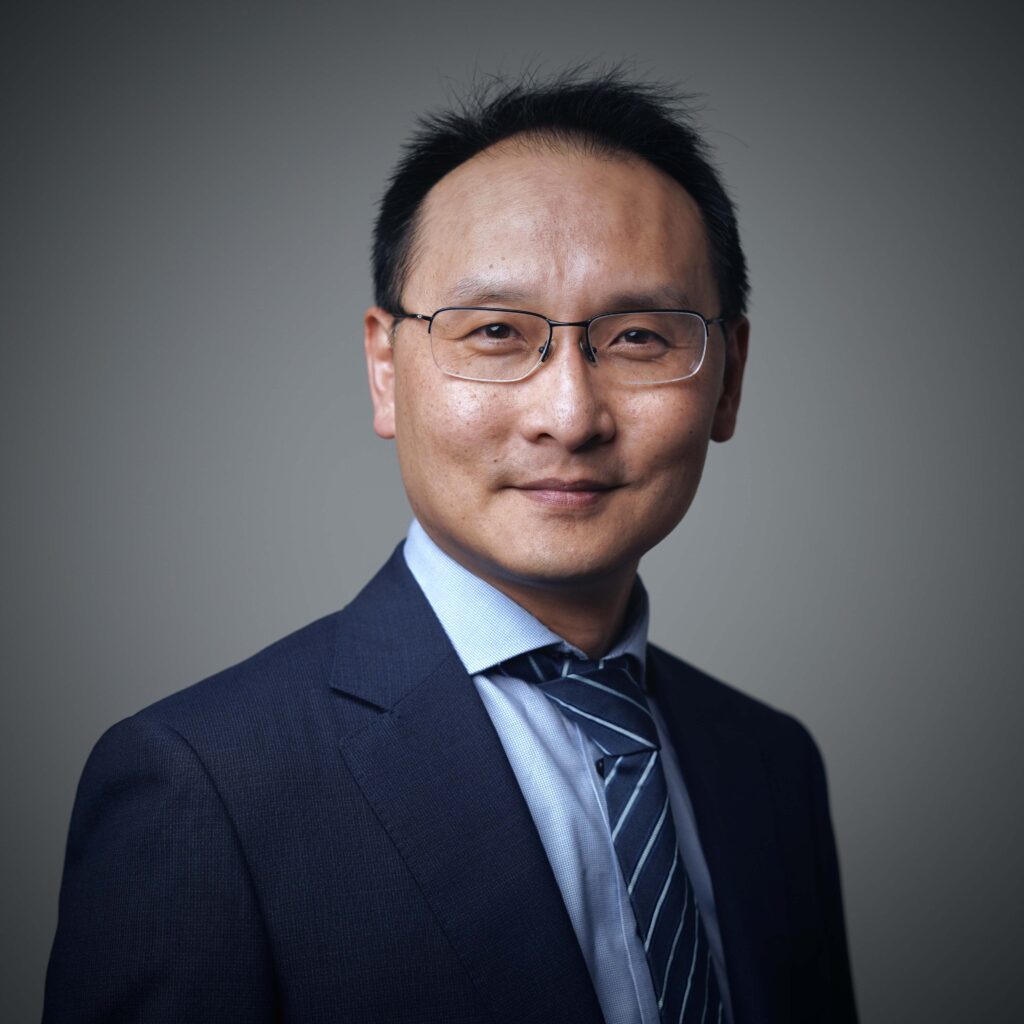
Italy’s not there, Spain’s not there, Germany’s struggling, so that leaves France as the leader in Europe. They have a big GDP, they have nuclear energy and aren’t reliant on, for example, Russia for gas and oil. If you look at the artificial intelligence (AI) play right now, data centres are being built around where the energy is. Their demographics are also strong.
There’s a chance for Europe to stand up if it can get motivated and figure out what it needs to do, produce nuclear energy and make structural changes to create industrial demand, promote jobs and grow the economy. Should the will to change persist, the EU could be a force to be reckoned with.
China
Paul de Sousa: A key factor behind China’s advancement is not just economic expansion, but also a deliberate systemic effort to counter a weaponized U.S. dollar, establishing a sanctions-resistant financial framework and developing a practical substitute for international commerce and investment. By means of projects like the Belt and Road and direct one-on-one accords, China is obtaining resources. Significant agreements, including the use of the yuan for liquefied natural gas (LNG) transactions, highlight a move away from dollar-based dealings.
China is opening its vast capital markets to foreign investment, as seen with the inclusion of its bonds in global indices like the FTSE World Government Bond Index. This has already attracted hundreds of billions in passive inflows.
China is the leading gold producer globally. It has become a global leader in critical future industries. It produces over 80 per cent of the world’s solar panels and dominates the electric vehicle (EV) battery supply chain. It has 70 per cent of global rare earth mine production, and 90 per cent of refining and processing. They have built strategic stockpiles and weaponized exports.

Chinese equities have traded at a deep discount to U.S. markets due to geopolitical risk premiums. This represents a potential value opportunity for investors who believe in the long-term thesis.
Zagari: Although against the status quo, we’ve held a five per cent allocation to China from the start of the year and continued to maintain this exposure. We’re favouring hyper-scalers over cyclicals, and we believe China’s AI breakthroughs will continue.
Jochlin: As an asset manager, you think of potential annual returns, and then you pile on the risks. One risk for China would be ambiguity around data. Then you ask whether there’s a reasonable alternative where you could achieve that same return. As asset allocators, we’ve been avoiding China because of that fact. They may have some tailwinds in terms of AI, but these are short-term tailwinds, we think, amid long-term structural problems.
Japan
Jochlin: They have some problems in terms of how much debt they’ve issued, and how much the government owns of Japanese government bonds. I think you have to look at local industry and what they’re really trying to do right now. Taiwan is very specific to semiconductors. China has shifted strongly to EVs and battery production. Where is Japan’s comparative advantage into the future? I can’t really find one.
However, Japan’s also been making corporate reforms. After this long period of deflation, they have some initiatives to raise the return on equity to make it more appealing to outside investors.
Li: Japan is a resilient country. With new leadership, I believe they are looking at some really strong growth ahead.
South America
Li: I think the current U.S. administration is doing the right thing focusing on South America, particularly countries rich in rare earths. Argentina has been reforming, and if they pull this off and stabilize their currency, they have abundant resources. Another country I want to look at is Venezuela. If the Maduro regime is replaced by a more democratic government, their oil reserves are phenomenal, and they can export at a very low price. If Venezuela can come back from this low starting point, that’s a huge growth opportunity.

Jochlin: When I put on my investment lens and look at South America, I think of commodities. I wouldn’t allocate capital to their equity markets per se. But as an investor, we typically look at bonds, because you’re taking on certain types of risks that are returned in fixed income. If you hedge out the currency risk, there are a lot of opportunities to purchase select countries’ bonds, used to fund oil extraction or whatever it may be. That’s typically where an emerging market manager will look to pick up a source of return from these countries.
India and other emerging markets
Jochlin: India’s had flattish performance this year, but the economy, in terms of demographics, is very strong. I think India will grow faster than a lot of developed nations, such as the European countries.
But we have to be mindful of correlations. If you have another instance of something like the Great Financial Crisis, emerging markets are sold much more rapidly than broad markets.
India represents perhaps 16 per cent of a broad basket emerging market ETF. Singapore is another example of a strong performer compared to broader emerging market indices. However, in a typical EM ETF, Singapore’s weight is tiny, so its outperformance barely registers in overall returns. So, there’s a delta there in terms of taking on exposure for long-term economic growth versus looking at the climate that we’re in today and taking a small exposure to India and Singapore, not the remaining index. That’s what we’ve been doing as a group.
Li: When investing in EMs such as India, boots-on-the-ground active management is worthwhile. Many local business practices can’t be fully evaluated from a chair in North America, so do your due diligence.
The over-arching message: While there’s a case to be made for diversification away from U.S. markets, investors should tread carefully, parse broader market groups and do their due diligence to pick likely winners among countries, sectors and companies with the potential to outperform.
Peter Kenter is a Toronto-based writer with a deep and abiding interest in how everything in the world works and how it got that way. He’s written about the economy, investing, financial services, cryptocurrency, pharmaceuticals, mining, energy, cannabis, agriculture, consumer electronics, education, sponsorship marketing, and entertainment. He’s the author of TV North: Everything You Wanted to Know About Canadian Television. He loves English bull terriers.
The Canadian Family Offices newsletter comes out on Sundays and Wednesdays. If you are interested in stories about Canadian enterprising families, family offices and the professionals who work with them, but like your content aggregated, you can sign up for our free newsletter here.
Please visit here to see information about our standards of journalistic excellence.