

Institutional and high-net-worth investors and family offices looking for opportunities in Canada’s industrial real estate market might want to keep in mind a simple idea: small is beautiful.
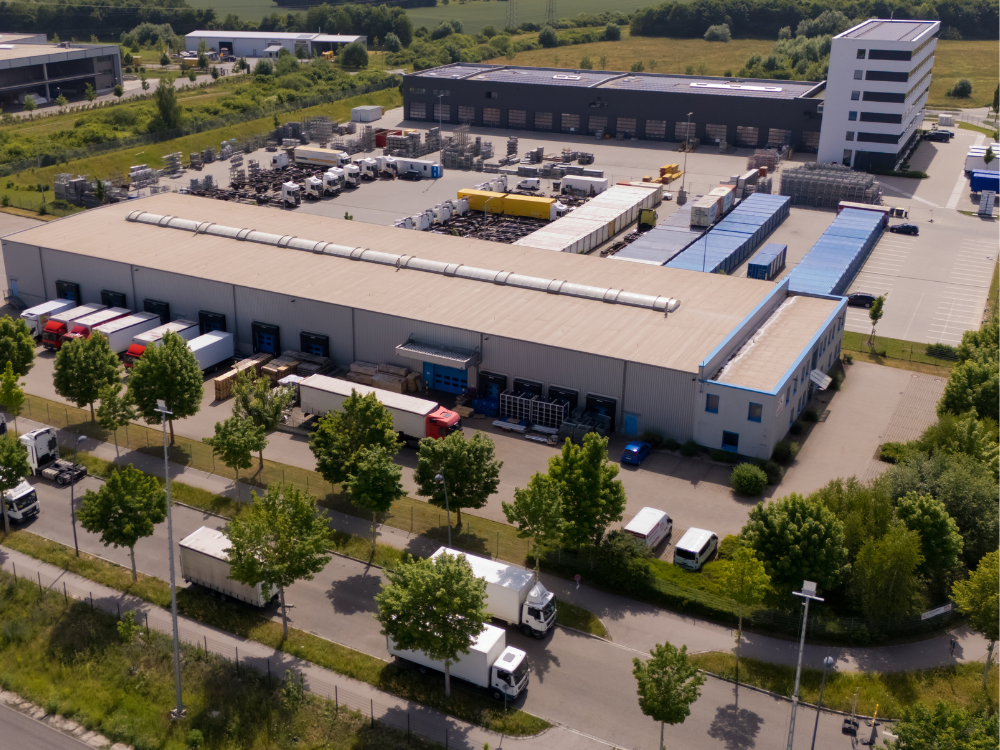
In Canada’s vast industrial market, large-scale buildings such as manufacturing, distribution centres and logistics hubs tend to get the most attention. But the economy is quietly being powered by businesses lodged in Small Bay industrial sites—generally 50,000 square feet or less.
While Small Bay sites make up only 30 per cent of the total 2.4 billion square feet of industrial inventory in Canada, the industries that occupy these smaller sites tend to remain resilient through volatile economic cycles.
“Small Bay properties can hold a wide variety of tenants, some of them taking up units of only 2,000 to 4,000 square feet,” says Quinntin Fong, senior vice president and fund manager for the Fiera Real Estate Industrial Fund.

Fiera’s fund manages a significant portfolio of small- and medium-bay industrial properties in primary and secondary markets across Canada in an open-ended structure with a 40 year history in this sub-asset class. “We do more than 100 lease deals a year across over 100 properties, which speaks to the volume and diverse tenant demand for our properties,” says Max Zhu, Fiera’s director of strategy, planning and analytics.
“These types of spaces can service light manufacturing, distribution and even be service or retail-oriented too—housing your local contractor, gym, or your favourite sandwich shop,” Fong says.
The strength of Small Bay industrial real estate as an investment is underpinned by five key pillars, says Michael Le Coche, Fiera’s vice-president, research and predictive analytics, and the author of a whitepaper on the Small Bay sector.
“The first strength is that Small Bay industrial properties are less affected by market cycles than larger sites,” he says. Cyclical demand is measured by net absorption, which looks at the space at a property that becomes occupied minus the space that becomes vacant.
Demand for Small Bay is more stable and predictable, which in turn has lowered its investment risk compared with other real estate segments. Investors in Small Bay industrial assets continually benefit from lower turnover costs and consistent income.
Michael Le Coche
“Unlike larger-sized industrial properties that depend more on global trade and supply chain patterns, Small Bays tend to serve local businesses that provide essential goods and services whose demand remains insulated from macroeconomic headwinds,” he says.
The second virtue of Small Bay as an investment is the segment’s consistently strong demand. Small Bay’s diverse tenant base—light manufacturers, wholesalers, service providers and service businesses—are consistently vital to Canada’s core economy.

“Small Bay units for service providers and businesses such as local gyms, showrooms and last-mile distribution hubs are a cost-effective alternative to traditional retail spaces,” Le Coche says. “Demand has been structurally strong for more than a decade.”
Small Bays also benefit from what experts call “hardened income”—a wide variety of tenants that keep the income stream more resilient.
“Small Bay tenants are typically engaged in industries that fulfill essential consumer needs, such as home maintenance, auto repairs and local logistics. Each property is usually multi-tenanted as well, which adds a level of income diversification, in case a tenant turns over,” Le Coche explains in his whitepaper.
Between 2015 and 2024, there were more than 20,000 leasing deals for Small Bay properties of 10,000 square feet or less, compared with only about 2,000 leases for properties larger than 20,000 square feet. With less reliance on a few large tenants, Small Bay properties have lower investment income volatility than larger industrial buildings, the whitepaper says.
The fourth strength that makes Small Bay properties a strong investment contender is a persistent lack of supply. This might not seem obvious to those who drive by warehouses that appear to be unoccupied, Fong says.
“But there’s a persistent supply constraint, because the cost to build is prohibitive. The success of Small Bay properties depends on being close to larger population centres, where the land is more expensive,” he explains.
While it may seem like there is a lot of available space across the country, the number of Small Bay property has declined by three per cent between 2015 and 2024. Small Bay properties in Canada peaked at 15.7 per cent of new construction in 2017, but they have been stuck at between five and eight per cent over the past five years, according to Fiera’s research.

The fifth pillar of strength that Small Bay industrial properties enjoy may seem counterintuitive: the segment tends to be mismanaged and mispriced. Ownership is often fragmented and not necessarily professional, and many Small Bay properties are overlooked because they are typically older vintage and smaller, Fong says.
“But if you actually look at the additional return that you can get for the inherently low risk, Small Bay is an attractive play which we have seen yield double digit returns, unlevered,” he says. Particularly so for investors such as family offices, Fong adds.
“Small Bay investments are proven to preserve capital,” he says, “while bringing in good income that will help support a family’s philanthropic or passion projects.”
Disclaimer: This story was created by Canadian Family Offices’ commercial content division on behalf of Fiera Real Estate.